Posted on Leave a comment

Experience the Soul-Stirring Magic of Puri’s Grand Rath Yatra

Devotees pulling the giant chariots during Rath Yatra of Puri, OdishaDevotees pulling the giant chariots during Rath Yatra of Puri, Odisha

Introduction

The Rath Yatra of Puri is one of the most celebrated Hindu festivals in India, drawing millions of devotees from around the world. Held annually in the sacred city of Puri, Odisha, it honors Lord Jagannath (an incarnation of Lord Vishnu) along with his siblings, Balabhadra and Subhadra. What sets this yatra apart is the grand procession of three giant wooden chariots, symbolizing a divine journey from the Jagannath Temple to the Gundicha Temple.


Historical and Religious Significance

Dating back to the 12th century, the Rath Yatra is mentioned in the Skanda Purana, Brahma Purana, and other ancient texts. It represents the annual visit of Lord Jagannath to his birthplace — Mausi Maa Temple (Gundicha Temple), staying there for nine days before returning.

Devotees believe that participating in or even witnessing the Rath Yatra grants moksha (liberation) and immense spiritual blessings.


Rath Yatra 2025 Date and Key Events

Event Date (2025) Details
Rath Yatra (Start) 29 June 2025 Lords begin their journey to Gundicha temple
Hera Panchami 3 July 2025 Goddess Lakshmi’s symbolic protest
Bahuda Yatra (Return) 7 July 2025 Return journey to Jagannath Temple
Suna Besha (Golden Dress) 8 July 2025 Lords dressed in gold ornaments
Niladri Bije 9 July 2025 Re-entry into Jagannath Temple

The Magnificent Chariots

Each year, new chariots are constructed from scratch using Neem wood, in strict accordance with tradition.

Deity Chariot Name Color Height (approx.) Wheels Pulling Day
Lord Jagannath Nandighosha Red & Yellow 45 ft 16 First day (29 June)
Lord Balabhadra Taladhwaja Red & Blue 44 ft 14 Same day
Goddess Subhadra Darpadalana Red & Black 43 ft 12 Same day

Global Reach and Cultural Impact

  • Millions visit Puri annually; in 2023, over 1.2 million pilgrims attended the yatra.
  • Live coverage on Doordarshan, YouTube, and ISKCON TV expands its global presence.
  • Rath Yatra is also celebrated in London, New York, Durban, and Singapore by diaspora communities.

Rituals and Traditions

  • Chhera Pahanra: The Gajapati King of Puri sweeps the chariot floors with a golden broom, showing humility.
  • Devotees pull the chariots with thick ropes — a sacred act believed to cleanse sins.
  • No horses or animals are used; everything is done by hand to honor divine will.

Interesting Facts and Figures

  • The chariots use over 1,000 logs and 200 carpenters work for 2 months to build them.

  • Each chariot has its own flag, driver (Sarathi), and guardian deities.

  • The ropes used to pull the chariots are 22 meters long and 8 inches thick.

READ MORE ON CURRENT AFFAIRS


Posted on Leave a comment

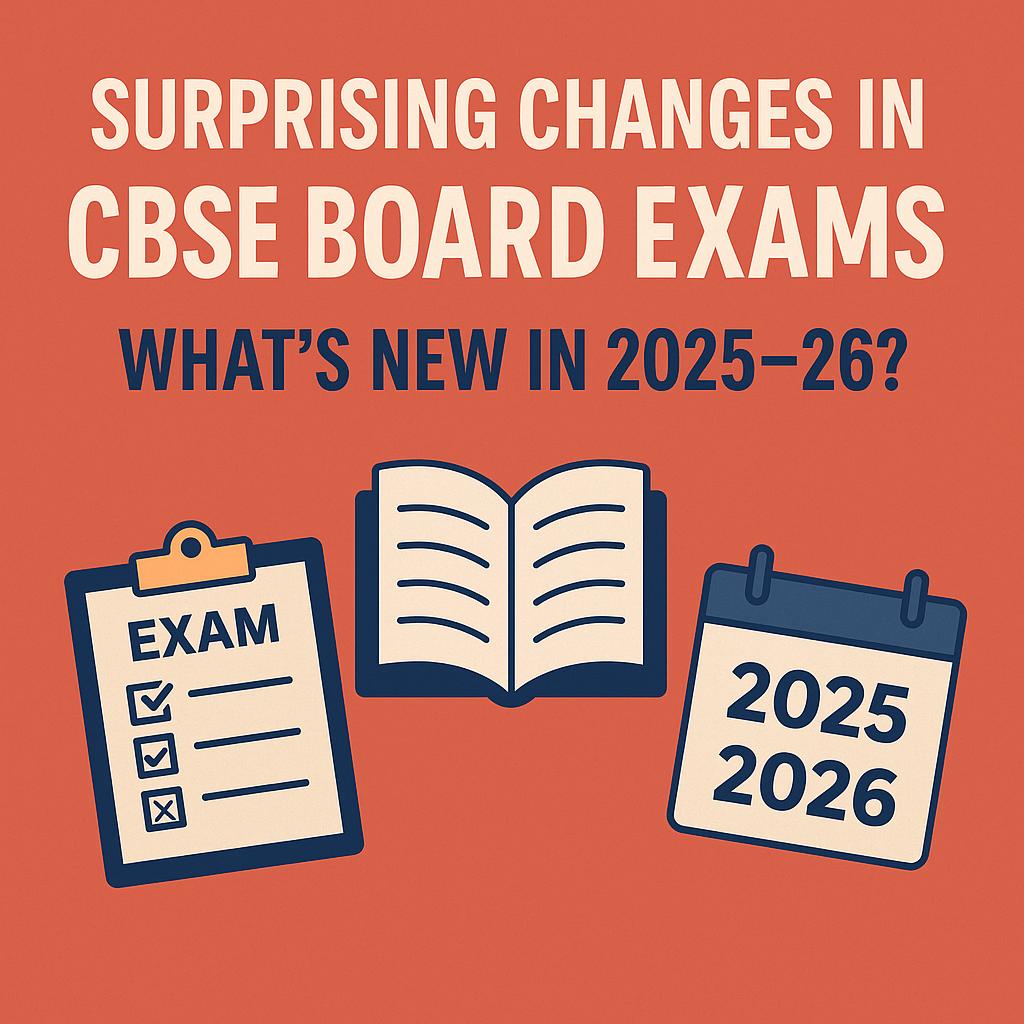
Surprising Changes in CBSE Board Exam: What’s New in 2025–26

Illustration highlighting surprising changes in CBSE Board Exams 2025–26 with exam icons and calendar dates

The CBSE Board Exam pattern is going through major changes. These updates will affect millions of students starting in 2025 and 2026. The changes aim to reduce exam pressure, promote real learning, and make the system more student-friendly.

Let’s explore the most important updates and how they will impact students.


📘 Syllabus Cut for CBSE Board Exam 2025

CBSE has reduced the syllabus by 15% for Classes 10 and 12. This change starts in the academic year 2024–25. The goal is to help students focus on key concepts instead of rote learning.

Along with the shorter syllabus, CBSE has reduced the number of long-answer questions. This means students will spend less time memorizing and more time understanding the subjects.


📊 New Marking System and Paper Format for CBSE Board Exam

From the 2025 CBSE Board Exam session, the marking pattern is changing:

  • 40% internal assessments
  • 60% final board exam

In addition, up to 50% of exam questions will now be competency-based. These questions test how well students apply what they have learned in real-life situations.

This format encourages students to build critical thinking and practical skills. It also makes exams more relevant and useful for their future.


📅 Two Board Exams Every Year from 2026

One of the most important updates is the introduction of two CBSE Board Exams every year. Starting in 2026, students in Classes 10 and 12 can take the exam twice.

  • First exam: Expected around February–March
  • Second exam: Scheduled for May

The best score from the two attempts will be considered final. As a result, students will get a second chance without losing an entire year. This change aims to reduce stress and give students more flexibility.


🔐 Better Security and Transparency in Evaluation

CBSE has improved its evaluation process to make it more secure and student-friendly.

In 2025, all answer sheets will come with QR codes and unique IDs. This helps stop tampering and ensures that students’ papers are handled fairly.

Students will also get photocopies of their answer sheets before they apply for re-evaluation. This new process gives students a clear view of how they were marked and helps them make informed decisions.


📆 Supplementary and Improvement Exams: July 2025

The CBSE Board Exam improvement system is also getting better. Starting July 15, 2025:

  • Class 10 students can improve scores in any subject
  • Class 12 students can reattempt one subject

This update gives students a fair chance to improve their marks without waiting a full year.


📈 Early Results Show Positive Impact

Recent results show that the new changes are working. In West Bengal, 94.9% of Class 10 students passed the CBSE Board Exam in 2025. That’s higher than the national average of 93.7%.

For example, at DPS Ruby Park, two out of three students scored more than 90%. These schools focused more on competency-based preparation, which clearly made a difference.


📌 Key Changes in CBSE Board Exam at a Glance

ChangeEffective YearImpact
15% Syllabus Reduction2025Less pressure, more focus
New Assessment Pattern2025Internal marks increased
Two Board Exams Per Year2026Best score counts
QR-Coded Answer Sheets2025Improved security
Transparent Re-evaluation2025Photocopies before recheck
July Improvement Exams2025Retake without waiting a year

🧠 Final Thoughts

The CBSE Board Exam reforms are a big step toward a better learning system. These changes offer more flexibility, encourage deeper understanding, and reduce the stress of single-attempt exams.

If you’re a student or parent, it’s time to prepare for this new exam pattern. Start adapting your study methods to stay ahead in the next CBSE Board Exam cycle.

READ MORE ABOUT CURRENT AFFAIRS.
Posted on Leave a comment

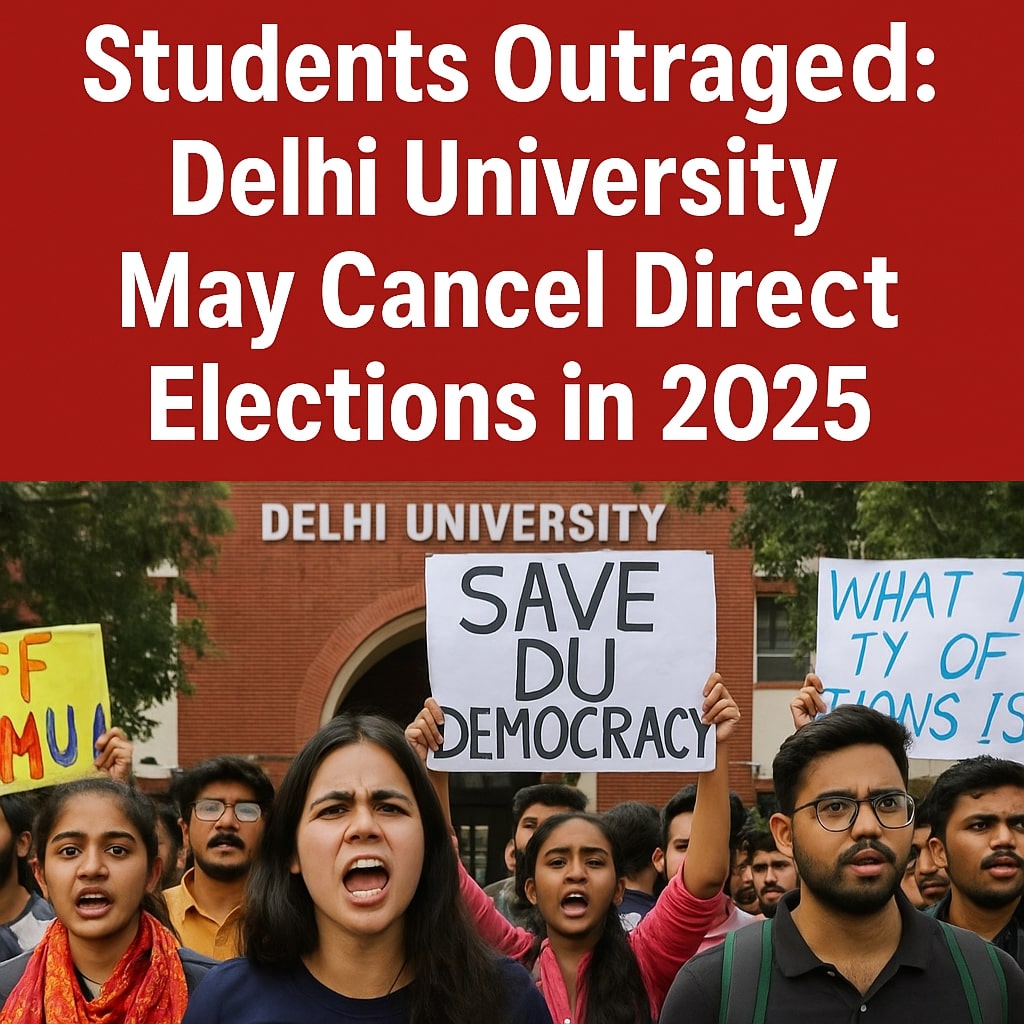
Delhi University 2025 Election Sparks Student Unrest

🔍 What’s Going On?

Delhi University is once again in the spotlight. This time, it’s because of a proposed change to how student union elections will held in Delhi University 2025 Election. The university may end direct elections and introduce a new indirect voting system. As a result, students would no longer vote directly for their leaders.

🔄 What Will Change in Delhi University 2025 Election?

Currently, all students at DU can vote in the Delhi University Students’ Union (DUSU) elections. However, under the proposed plan, only elected class or college representatives would vote for the top DUSU positions. This system is similar to how the Rajya Sabha is elected in India.

According to the university, this shift could reduce large campaigns, spending, and damage to public property. In theory, it sounds like a cleaner approach. But students believe otherwise.

🚨 Why Are Students Protesting?

Many student organizations, including ABVP, NSUI, AISA, and SFI, strongly oppose the change. They argue that it takes away students’ right to vote. Moreover, they fear that indirect elections will lead to unfair deals, political pressure, and limited transparency.

For example, a protester said, “We deserve a say in who represents us. This system cuts us out completely.”

In response, large student protests have taken place across North and South Campus.

🗣️ What Students Are Saying

“How can it be a student election if students don’t vote?”
— An economics student, 2nd year

“This isn’t about order. It’s about control.”
— ABVP member, protesting outside the VC’s office

Clearly, the student body is not ready to give up its vote.

🧑‍🏫 What the University Says

On the other side, the university cites a Delhi High Court order from late 2024. The court advised measures to reduce money and power misuse in campus elections. Following that, the Executive Council proposed this indirect model.

Officials argue that this method is more disciplined. Additionally, they claim it will lead to issue-based campaigning and cleaner politics.

🔔 What’s the Latest?

So far, no final decision has been made. After heavy protests, the Executive Council has agreed to review the plan. Further discussions are expected before the new academic session begins.

In the meantime, the Aam Aadmi Party (AAP) has launched its new student wing: ASAP (Association of Students for Alternative Politics). Interestingly, it plans to contest elections in all 52 DU colleges.

📌 Why Delhi University 2025 Election Matters

  1. Student elections shape future leaders. Many national politicians started in DUSU.
  2. Decisions affect student life. From hostels to safety, leaders have real impact.
  3. Democracy is the core issue. The way leaders are chosen matters as much as who gets chosen.

✅ Final Words

Delhi University 2025 election is more than just a student vote. It’s about democracy, participation, and student rights. While the administration may want structure, students are asking for voice.

The big question remains: Will the vote stay with the students, or move behind closed doors?

Let’s wait and see what the next Executive Council meeting decides.

Read our new article on how war effects India’s stock market.

Posted on Leave a comment

7 Incredible ChatGPT Alternatives You’ll Love in 2025 (Especially If You Want to Save Time)

AI tools are becoming part of daily life. While ChatGPT remains popular, many new AI platforms offer better features for specific needs. Whether you’re a student, writer, or working professional, these tools can help you work faster and smarter.

Here are 7 amazing ChatGPT alternatives trending in India this year.


1. Google Gemini – Smart Help for Google Users

If you use Gmail, Docs, or Sheets, Google Gemini is a perfect fit. It works inside these apps and helps you write, summarize, and analyze content quickly.

Why people love it:

  • Suggests content as you type
  • Summarizes emails and documents
  • Understands Indian languages

In short: It saves time and feels natural to use.


2. Microsoft Copilot – Best for Office Work

Microsoft Copilot is built for Word, Excel, and Teams. It writes emails, explains formulas, and creates reports with just a few clicks.

What makes it useful:

  • Simple task automation
  • Saves hours of typing
  • Works smoothly within Microsoft apps

As a result, it’s popular among office users and analysts.


3. Claude AI – Calm and Clear Conversations

Claude, made by Anthropic, is known for thoughtful replies. It is ideal if you want a chatbot that sounds more human and less robotic.

Top features:

  • Fewer errors than most bots
  • Handles long documents easily
  • Responds with a polite, clear tone

Therefore, many educators and researchers prefer it.


4. Perplexity AI – Fast and Reliable Answers

Perplexity AI acts like a smarter search engine. It gives direct answers and shows the source of each fact.

Why it stands out:

  • Shows real-time information
  • Cites trusted sources
  • No ads or clutter

In comparison, it’s faster and more accurate than Google for many users.


5. QuillBot – Perfect for Students and Bloggers

QuillBot is a writing assistant. Although it’s not a chatbot, it works great with tools like ChatGPT.

Key uses:

  • Paraphrasing and rewriting
  • Grammar correction
  • Summarizing long texts

As a result, it’s widely used for assignments and social media content.


6. HuggingChat – Open Source and Developer Friendly

HuggingChat is a free, open-source chatbot. It’s ideal for developers who want to build or test custom AI models.

What makes it special:

  • No login needed
  • Developer tools included
  • Customizable and fast

In addition, it supports advanced integrations for tech-savvy users.


7. BharatGPT & Indic AI – AI in Indian Languages

These tools support major Indian languages like Hindi, Tamil, Bengali, and more. They help users write, ask questions, and learn in their native tongue.

Why it matters:

  • Makes AI accessible across India
  • Helps students in regional schools
  • Useful for content creators in local languages

As India grows, these tools will be more important than ever.


Final Thoughts

In conclusion, you don’t have to rely on just one AI tool. Each of these ChatGPT alternatives has its own strengths. Some are great for emails. Others are better for research or writing in Indian languages.

Check out other interesting articles as well, related to lifestyle, stock market and many more.