Introduction
The SCO Summit 2025, held in Qingdao, China, marked a critical turning point for Eurasian geopolitics. As global tensions rise and the demand for regional stability grows, this summit offered not just diplomacy, but decisive action. With defense, security, and sovereignty dominating the agenda, India’s bold moves and China’s strategic leadership stood out.
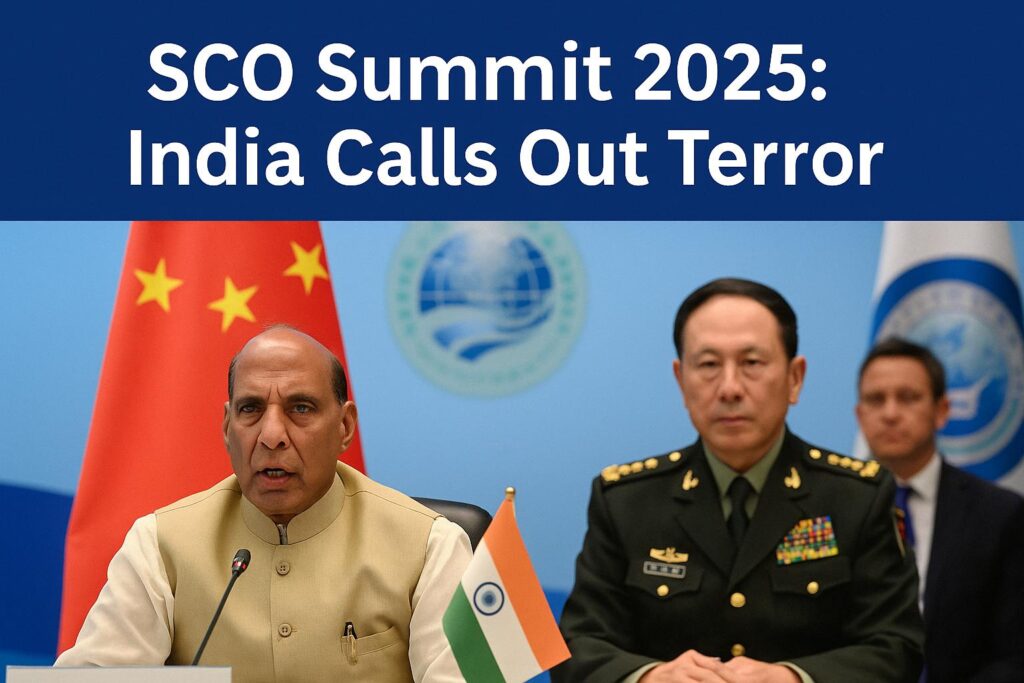
India Refuses to Back Down at SCO summit 2025
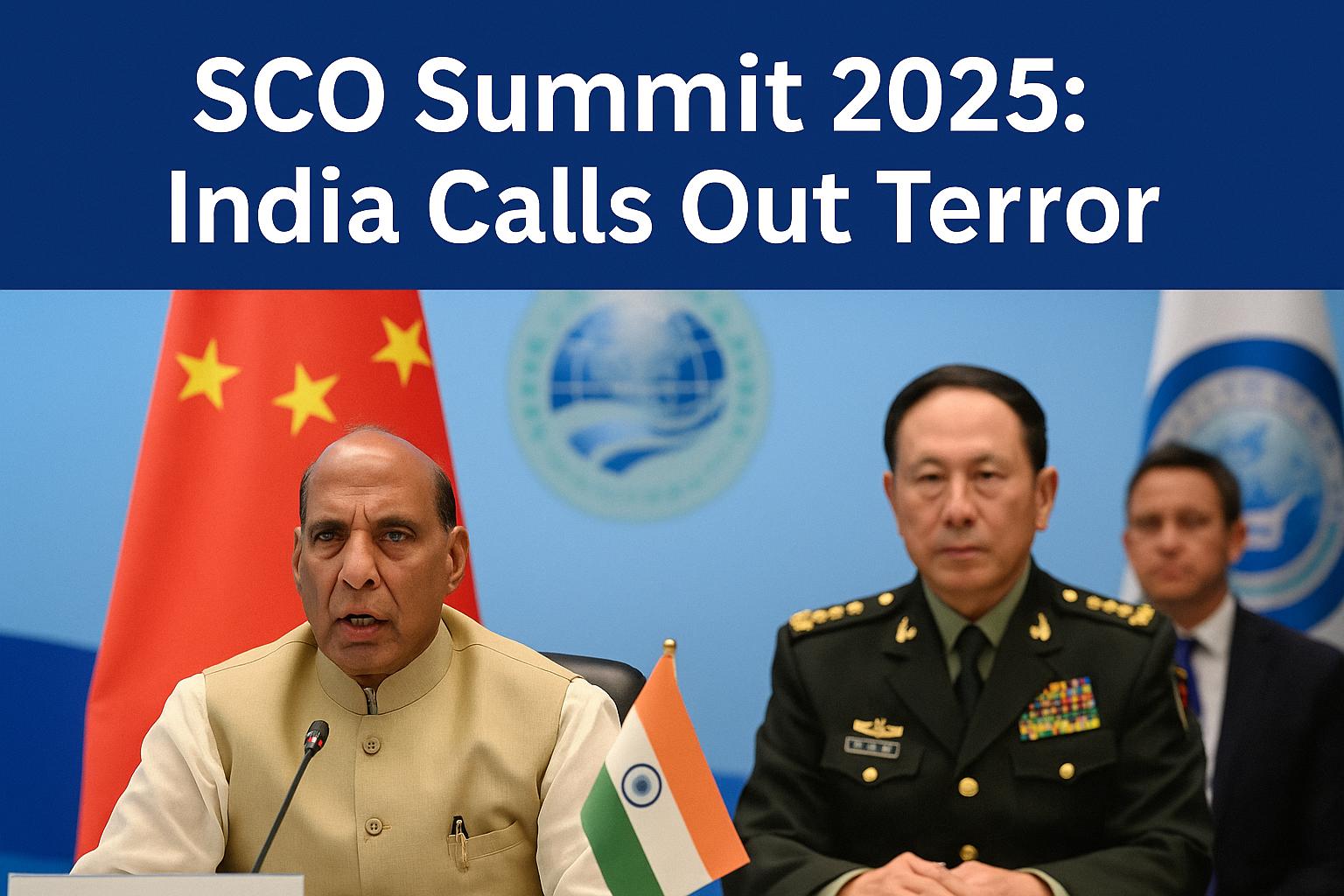
At the heart of the SCO Summit 2025, Indian Defence Minister Rajnath Singh delivered a powerful message—India will not tolerate state-sponsored terrorism. Refusing to sign the joint communique, India made its position clear:
“There is no room for double standards in fighting terror.”
This stance was in direct response to Pakistan’s failure to acknowledge its cross-border activities and China’s silence on regional terrorism.
China’s Dual Role: Host and Challenger
While China hosted the summit, its role was far from neutral. On one hand, Admiral Dong Jun welcomed discussions on regional peace and called for stronger multilateral ties. On the other, China avoided firm language against terrorism and continued to shield Pakistan diplomatically.
Despite this, China did engage in bilateral talks with India. For the first time in two years, the India-China military hotline was reopened, signaling a cautious thaw in strained relations.
Diplomatic Highlights
The SCO Summit 2025 was not just about disputes—it also saw important diplomatic gestures:
- India presented traditional gifts like Madhubani art and a Lord Nataraj statue, promoting soft power diplomacy.
- Defence ministers from Russia, Belarus, Kazakhstan, and Iran participated in side meetings to strengthen bilateral cooperation.
- Agreements were discussed on counterterrorism coordination, cyber defense, and military logistics.
Key Takeaways from the SCO Summit 2025
| Topic | Outcome |
|---|---|
| India’s firm message | Refused to sign the final statement without terror condemnation |
| China–India talks | Agreed to reopen hotline and explore border dispute solutions |
| Regional cooperation | Focus on cybersecurity, joint training, and infrastructure sharing |
| Diplomatic signals | Emphasis on culture and peaceful engagement |
Why the SCO Summit 2025 Matters
This year’s summit wasn’t just another diplomatic gathering. It was a test of resolve, a show of strength, and a fight for clarity in a region full of contradictions. India’s courage to stand alone, China’s quiet maneuvers, and the broader push for regional unity made the SCO Summit 2025 both intense and unforgettable.
What’s Next for SCO Nations?
Looking ahead, the Tianjin Heads of State SCO Summit later this year will focus on:
- Finalizing joint action plans on counterterrorism
- Expanding SCO’s influence into Central Asia and West Asia
- Launching a permanent SCO Cybersecurity Task Force
India, although increasingly cautious, will likely continue pushing for a terror-free regional charter.
Final Thoughts
The SCO Summit 2025 was a rare mix of diplomacy, drama, and determination. With India’s principled stand and China’s hosting finesse, the summit laid bare both the fractures and future of Eurasian unity. Whether this event leads to real progress—or just political theater—depends on what comes next.
In a world of shifting alliances, SCO’s choices now echo far beyond Asia.
ALSO READ ABOUT RECENT NATO SUMMIT