
Posted on Leave a comment

Strait of Hormuz: The World’s Most Important Oil Chokepoint

Introduction

The Strait of Hormuz is one of the most strategically important waterways in the world. Located between the Persian Gulf and the Gulf of Oman, it serves as the only sea passage connecting the oil-rich Gulf region to the Arabian Sea and the Indian Ocean. Every day, millions of barrels of crude oil and liquefied natural gas (LNG) pass through this narrow waterway, making it essential to global energy security and international trade.

Because of its economic and geopolitical significance, the Strait of Hormuz is frequently at the center of regional tensions and international diplomacy.

Where Is the Strait of Hormuz?

The Strait of Hormuz lies between Iran to the north and Oman and the United Arab Emirates (UAE) to the south. It connects the Persian Gulf with the Gulf of Oman, which opens into the Arabian Sea and the wider Indian Ocean.

At its narrowest point, the strait is approximately 33 kilometers (21 miles) wide. However, the designated shipping lanes used by large commercial vessels are much narrower, requiring careful navigation and international cooperation to ensure safe passage.

Why Is the Strait of Hormuz So Important?

The Strait of Hormuz is widely regarded as the world’s most important maritime oil transit route. A substantial share of globally traded crude oil and significant volumes of liquefied natural gas pass through this corridor each day.

Major energy-exporting countries that rely on the strait include:

  • Saudi Arabia
  • Iraq
  • Kuwait
  • Qatar
  • Bahrain
  • The United Arab Emirates
  • Iran

Any disruption to shipping in the strait can influence global energy markets, fuel prices, shipping costs, and economic stability around the world.

Historical Significance

For centuries, the Strait of Hormuz has been a vital trade route linking the Middle East with Asia, Africa, and Europe. Merchants once transported spices, pearls, textiles, and other valuable goods through these waters.

In the modern era, the discovery of large oil and natural gas reserves transformed the strait into one of the world’s most strategically significant maritime passages.

Military and Strategic Importance

Because of its narrow geography and critical role in global energy transportation, the Strait of Hormuz has major military importance.

Countries in and beyond the region maintain naval forces to protect commercial shipping and ensure freedom of navigation. The waterway is also closely monitored during periods of heightened regional tension, as any disruption could have far-reaching economic and security consequences.

Tensions in the Strait of Hormuz

The Strait of Hormuz has experienced numerous periods of heightened tension over the past several decades. These have included:

  • Attacks on commercial shipping
  • Seizures of oil tankers
  • Naval confrontations
  • Drone and missile incidents
  • Increased military patrols

While these events have occasionally disrupted maritime traffic, international efforts have generally helped keep the shipping lanes open.

Economic Impact

The importance of the Strait of Hormuz extends far beyond the Middle East. Many countries depend on oil and gas transported through this route to power industries, transportation, and electricity generation.

A prolonged disruption could lead to:

  • Higher global oil prices
  • Increased transportation costs
  • Inflation in many economies
  • Supply chain disruptions
  • Greater volatility in international energy markets

For these reasons, governments, shipping companies, and energy producers closely monitor developments in the region.

Environmental Considerations

The Strait of Hormuz is also environmentally sensitive. Heavy tanker traffic increases the risk of oil spills, marine pollution, and damage to coastal ecosystems.

Regional governments and international organizations work to improve maritime safety, strengthen environmental protections, and reduce the risks associated with intensive shipping activity.

Interesting Facts About the Strait of Hormuz

  • It is the only sea route connecting the Persian Gulf to the open ocean.
  • It is one of the busiest maritime trade corridors in the world.
  • Both oil and liquefied natural gas (LNG) are transported through the strait.
  • The waterway is strategically important to both regional and global economies.
  • Events in the Strait of Hormuz can affect fuel prices around the world within a short period.

Conclusion

The Strait of Hormuz is far more than a narrow stretch of water—it is a critical gateway for global energy supplies and international trade. Its location, economic importance, and strategic value make it one of the most closely watched waterways in the world. Maintaining safe and secure navigation through the strait remains a priority for countries that depend on stable global energy markets and uninterrupted maritime commerce.

Posted on Leave a comment

The War History of Iran and America: A Timeline of Conflict, Tensions, and Geopolitical Rivalry

Introduction

The relationship between Iran and the United States has been one of the most complex and controversial in modern international politics. Although the two countries have never declared a formal war against each other, they have experienced decades of political confrontation, military clashes, proxy conflicts, economic sanctions, and diplomatic crises. Understanding the history of Iran–U.S. tensions helps explain many of the conflicts that continue to shape the Middle East today.

Early Friendly Relations

During the 19th and early 20th centuries, the United States and Iran (then known as Persia) maintained generally friendly diplomatic relations. The U.S. was viewed as a relatively neutral power compared to European colonial empires, and cooperation expanded gradually through trade and diplomacy.

The 1953 Coup: A Turning Point

A major turning point came in 1953 when the CIA, working with British intelligence, supported a coup that removed Iran’s democratically elected Prime Minister, Mohammad Mossadegh. Mossadegh had nationalized Iran’s oil industry, threatening British economic interests.

Following the coup, Shah Mohammad Reza Pahlavi regained power with strong American support. Many Iranians viewed the event as foreign interference in their country’s sovereignty, and it remains one of the most significant causes of anti-American sentiment in Iran.

The 1979 Iranian Revolution

In 1979, the Iranian Revolution overthrew the Shah and established the Islamic Republic under Ayatollah Ruhollah Khomeini. The new government adopted a strongly anti-American foreign policy.

Later that year, Iranian students seized the U.S. Embassy in Tehran and held 52 American diplomats hostage for 444 days. The hostage crisis ended diplomatic relations between the two countries and marked the beginning of decades of hostility.

The Iran-Iraq War (1980–1988)

Although the United States did not directly fight Iran during the Iran-Iraq War, it generally supported Iraq led by Saddam Hussein. During the conflict, the U.S. provided intelligence and strategic assistance to Iraq while also protecting oil shipping routes in the Persian Gulf.

One of the most tragic incidents occurred in 1988 when the USS Vincennes mistakenly shot down Iran Air Flight 655, killing all 290 people on board. The incident further damaged relations between the two countries.

Sanctions and Nuclear Disputes

Throughout the 1990s and 2000s, the United States imposed increasingly strict economic sanctions on Iran over concerns related to terrorism, missile development, and its nuclear program.

In 2015, Iran and six world powers signed the Joint Comprehensive Plan of Action (JCPOA), commonly known as the Iran Nuclear Deal. The agreement limited Iran’s nuclear activities in exchange for sanctions relief.

In 2018, the United States withdrew from the agreement and reimposed sanctions, leading to renewed tensions.

The Killing of Qassem Soleimani

On January 3, 2020, the United States carried out a drone strike near Baghdad International Airport that killed Iranian General Qassem Soleimani, commander of the Islamic Revolutionary Guard Corps’ Quds Force.

Iran responded by launching missiles at U.S. military bases in Iraq. Although no large-scale war followed, the incident brought the two countries to the brink of direct military conflict.

Proxy Conflicts Across the Middle East

Rather than engaging in a full-scale conventional war, Iran and the United States have frequently confronted each other through proxy conflicts.

These confrontations have occurred in countries including:

  • Iraq
  • Syria
  • Lebanon
  • Yemen
  • The Persian Gulf

Iran has supported allied armed groups across the region, while the United States has backed various governments and military coalitions. These proxy conflicts have significantly influenced Middle Eastern security and regional politics.

Why Have Iran and America Never Declared War?

Despite decades of hostility, neither country has formally declared war on the other. Several factors help explain this:

  • The enormous economic and military costs of a full-scale conflict.
  • The risk of destabilizing the broader Middle East.
  • The possibility of diplomatic negotiations.
  • International pressure to avoid escalation.

Instead, both countries have relied on sanctions, limited military operations, cyber activities, intelligence operations, and indirect conflicts.

Global Impact

The rivalry between Iran and the United States has affected:

  • Global oil prices
  • International energy markets
  • Middle Eastern security
  • Nuclear non-proliferation efforts
  • International diplomacy

Because Iran occupies a strategically important location near the Strait of Hormuz, tensions between the two countries often have worldwide economic and political consequences.

Conclusion

The history of conflict between Iran and the United States spans more than seven decades and includes political intervention, revolution, sanctions, proxy warfare, and military confrontations. While the two nations have never fought a formally declared war, their rivalry has profoundly influenced global politics and security. Understanding this history provides important context for current events and future developments in the Middle East.

Posted on Leave a comment

Superman Movie 2025 Soars with Heart and Fearless Spirit

A bold and inspiring poster of Superman Movie 2025 showing Superman flying confidently through a vibrant sky with dynamic colors, symbolizing hope, courage, and heroism.

Introduction: A Hero Returns in a Big Way

The Superman movie 2025 is here, and it’s making waves across theatres. Directed by James Gunn, this powerful reboot blends heart, humor, and heroic action. With a fresh cast, deep storytelling, and meaningful visuals, this film is not just another superhero movie—it’s a symbol of hope and strength for a new generation.


A bold and inspiring poster of Superman Movie 2025 showing Superman flying confidently through a vibrant sky with dynamic colors, symbolizing hope, courage, and heroism.

A Fresh Take on Superman Movie 2025

Unlike earlier versions, the Superman movie 2025 skips the typical origin story. Instead, it places Clark Kent as an already established hero who struggles to balance his life as a reporter and the protector of Earth. The emotional tension between his human side and Kryptonian legacy creates a meaningful journey.

What makes this film uncommon is how it embraces humanity. Superman is no longer just a savior in the sky—he’s relatable, flawed, and deeply connected to the people he saves. This adds emotional weight and clarity that modern audiences will admire.


Stellar Performances That Touch the Heart

The cast of Superman movie 2025 shines in every scene.

David Corenswet as Superman

He brings charm and vulnerability to the role. His performance is soft yet strong, showing that being powerful doesn’t mean being emotionless.

Rachel Brosnahan as Lois Lane

Lois is no damsel. She’s fearless, bold, and full of integrity. Her chemistry with Superman is touching and believable.

Nicholas Hoult as Lex Luthor

Lex is sharp, calculating, and dangerous. Hoult’s portrayal gives the villain real-world relevance, which adds tension and meaning to the story.

Together, this trio powers the film with grace and grit.


Powerful Visuals and Memorable Music

From the colorful skies of Metropolis to the deep-space sequences, the Superman movie 2025 delivers bold visuals. Though some CGI moments feel stylized, they match the film’s comic-book energy.

The soundtrack, led by a blend of new and classic themes, lifts the emotional beats beautifully. Every heroic moment feels bigger because of the score’s impact.


The Message Behind the Superman Movie 2025

One of the strongest parts of the Superman movie 2025 is its emotional message. It tells us that strength isn’t about being perfect—it’s about doing the right thing, even when it’s hard. It also explores modern challenges like media bias, personal identity, and global trust.

This adds a thoughtful layer to what might have been just another action-packed ride.


Why You Should Watch Superman Movie 2025

  • A hopeful and emotional reboot of a global icon
  • Powerful performances by a talented cast
  • Balanced action, drama, and heartfelt moments
  • Uplifting themes suitable for all age groups
  • A strong start for the new DC Universe

Whether you’re a long-time fan or new to the Superman world, this movie delivers something special.


Where and How to Watch

The Superman movie 2025 is now showing in theatres across India in 2D, 3D, and IMAX formats. It is expected to be available on streaming platforms like HBO Max by October.


Final Thoughts: A Hero Reborn with Heart

The Superman movie 2025 is more than just a cinematic event—it’s a hopeful reminder of what makes heroes truly super. With a perfect mix of action and emotion, it stands tall as one of the most inspiring films of the year.

So if you’re looking for a story that makes you feel powerful, emotional, and inspired—don’t miss this one. The Man of Steel is back, and he’s better than ever.

ALSO READ PM MODI’S GLOBAL MISSION


Posted on Leave a comment

Modi’s Global Mission : A New Era of Indian Influence

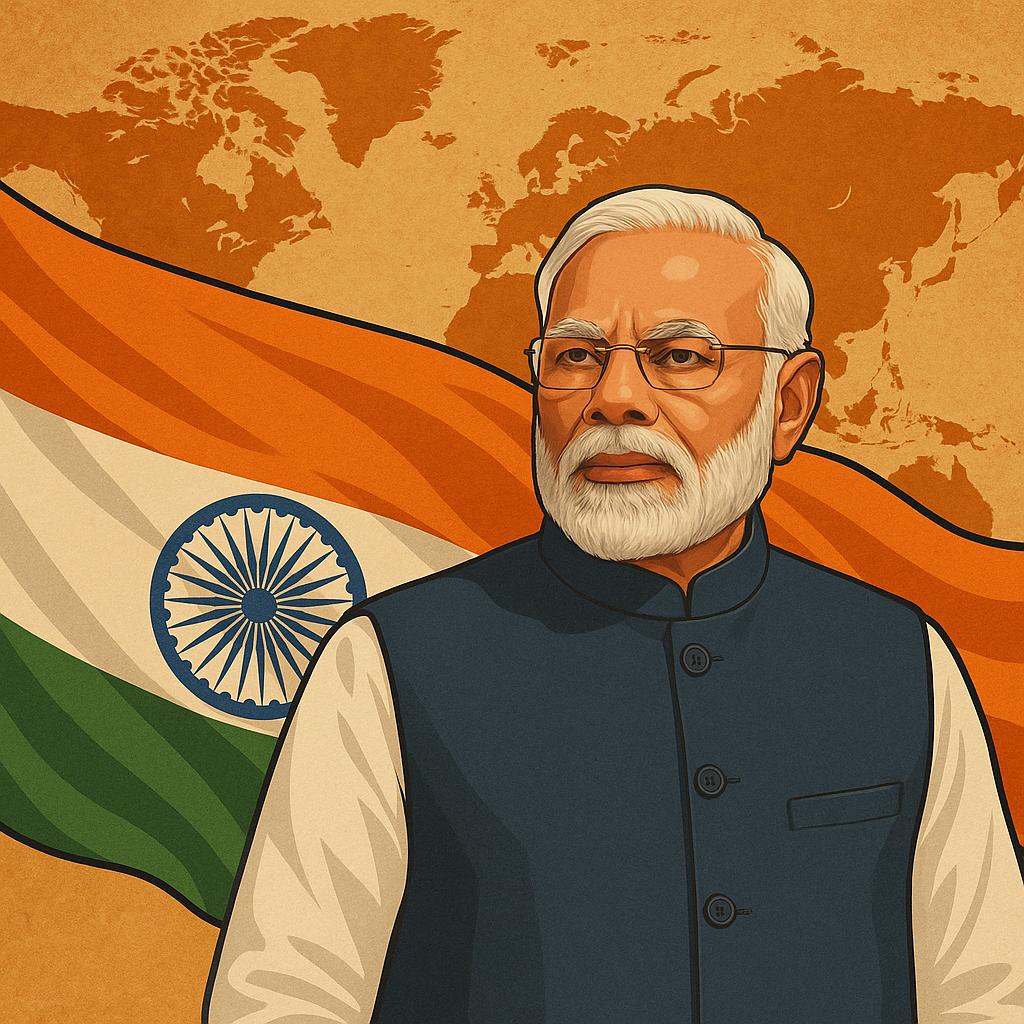
Digital illustration of Prime Minister Narendra Modi representing Modi's Global Mission , wearing a blue Nehru jacket, with the Indian flag and world map in the background, symbolizing India’s rise with pride and power.

Introductionto Modi’s Global Mission

India is no longer just a participant in global affairs, through Modi’s Global Mission —it’s becoming a decisive global force. Prime Minister Narendra Modi’s recent overseas tours reflect a bold new era of diplomacy—one centered on strength, pride, peace, and prosperity.

India is reshaping alliances, building powerful trade ties, and restoring civilizational respect. At every stop, world leaders are not only talking trade but are also honoring PM Modi for his vision and India’s growing global role.


Countries Visited and Honors Received

Below is a detailed look at the countries visited under Modi’s Global Mission, their outcomes, and the respects and recognitions PM Modi received:


🇷🇺 Modi’s Global Mission in Russia – Strategic Revival

  • City Visited: Moscow
  • Purpose: To deepen defense cooperation and energy deals amid global realignments.
  • Outcome: Renewed the Indo-Russian Long-Term Energy Pact; discussions on nuclear reactors and BrahMos exports.
  • Honor: Modi was awarded the Order of St. Andrew, Russia’s highest civilian honor, for strengthening Indo-Russian ties.

🇦🇹 PM Modi’s Global Mission in Austria – 75 Years of Relations

  • City Visited: Vienna
  • Purpose: First Indian PM to visit in over 40 years; aimed at technology, renewable energy, and skill development cooperation.
  • Outcome: MoUs on hydrogen, startup exchanges, and dual degrees for Indian students.
  • Honor: Received the Golden Badge of Honor from Austria’s Parliament—a rare tribute for global leadership.

🇮🇹 Italy – G7 & Global Governance

  • City Visited under PM Modi’s Global Mission: Apulia (G7 Summit)
  • Purpose: India was a special invitee to G7 Outreach; PM Modi pitched digital democracy and climate balance.
  • Outcome: Indian Green Hydrogen Mission featured in G7 outcomes; new Indo-Italian fashion sustainability initiative launched.
  • Honor: Hosted as the “Voice of the Global South” in G7 sessions—an indirect nod to India’s rising status.

🇦🇪 PM Modi’s Global Mission in  United Arab Emirates – Economic Expansion

  • City Visited: Abu Dhabi
  • Purpose: Strengthen economic and diaspora bonds under CEPA (Comprehensive Economic Partnership Agreement).
  • Outcome: CEPA 2.0 launched, enabling rupee-dirham trade and low-tariff corridors for small businesses.
  • Honor: Modi received the Zayed Medal, UAE’s highest civilian award, and addressed over 60,000 Indian expats at a grand diaspora event.

🇧🇷 Brazil – Reinvigorating BRICS

  • City Visited: Brasília
  • Purpose: Attend special BRICS+ summit to expand dialogue among developing nations.
  • Outcome: India and Brazil proposed a New South-South Digital Infrastructure Fund, enhancing cooperation in fintech and e-health.
  • Honor: Brazilian Parliament passed a resolution calling PM Modi the “Ambassador of the Global South.”

🇯🇵 Japan – Tech & Security Boost

  • City Visited: Tokyo
  • Purpose: Strengthen semiconductor production partnerships and Indo-Pacific security.
  • Outcome: Launched “AI Indo-Japan Connect 2040” and expanded naval exercises.
  • Honor: Japan conferred the Order of the Rising Sun, Gold and Silver Star on Modi, recognizing his efforts to build Indo-Pacific stability.

Future Trips Under Modi’s Global Mission

📌 United States – September 2025

To attend the Indo-Pacific Economic Dialogue and hold talks with G7 nations and Big Tech CEOs on digital security, space, and AI.

📌 South Africa – October 2025

For the G20–BRICS Unification Summit, where India will co-lead a proposal to align development finance with climate and equity.

📌 Australia – November 2025

To explore green rare-earth mining and strengthen university-level exchange programs.

📌 Bangladesh & Nepal – December 2025

To consolidate India’s Neighborhood First Policy and finalize river management pacts.


Geopolitical Significance of Modi’s Global Mission

  1. Multi-Polar World Vision
    India is building balanced ties with both the West (G7, Japan, USA) and East (Russia, BRICS). This makes India a neutral peace broker.
  2. Global South Leadership
    Modi champions the voice of developing nations, demanding fair climate financing and equitable trade policies.
  3. Tech & Talent Powerhouse
    From semiconductors in Japan to startups in Austria, India is promoting its youth-driven innovation ecosystem worldwide.
  4. Defense & Maritime Security
    Through stronger Indo-Pacific engagements and naval cooperation, India is ensuring open and safe sea routesfor global trade.

Economic Benefits of Modi’s Global Mission

  • New FDI Inflows: Over $30 billion pledged from G7+UAE visits
  • Startup Corridors: India now has tech and innovation corridors with AustriaJapan, and Italy
  • Trade in Local Currencies: Initiated with UAE, proposed with Brazil and Russia
  • Green Energy Partnerships: India is now part of a 5-country alliance for hydrogen and solar energy with Austria and Italy

Emotional Connections & Cultural Diplomacy

Modi’s Global Mission isn’t just about policies—it’s about people and pride.

  • In every country, he met with the Indian diaspora, shared cultural performances, and emphasized Bharatiya Sanskriti.
  • From performing aarti in Abu Dhabi to referencing Swami Vivekananda in Vienna, he carried India’s soul with him.

Conclusion

Modi’s Global Mission is more than a diplomatic calendar—it is a blueprint for India’s rise as a peaceful, powerful, and purposeful nation. By blending ancient values with modern strategy, PM Modi is crafting a future where India is not just heard, but revered.

Each visit under this mission adds a chapter of respect, resilience, and resurgence to India’s global story.

AlSO READ ABOUT INDUS VALLEY CIVILIZATION


Posted on Leave a comment

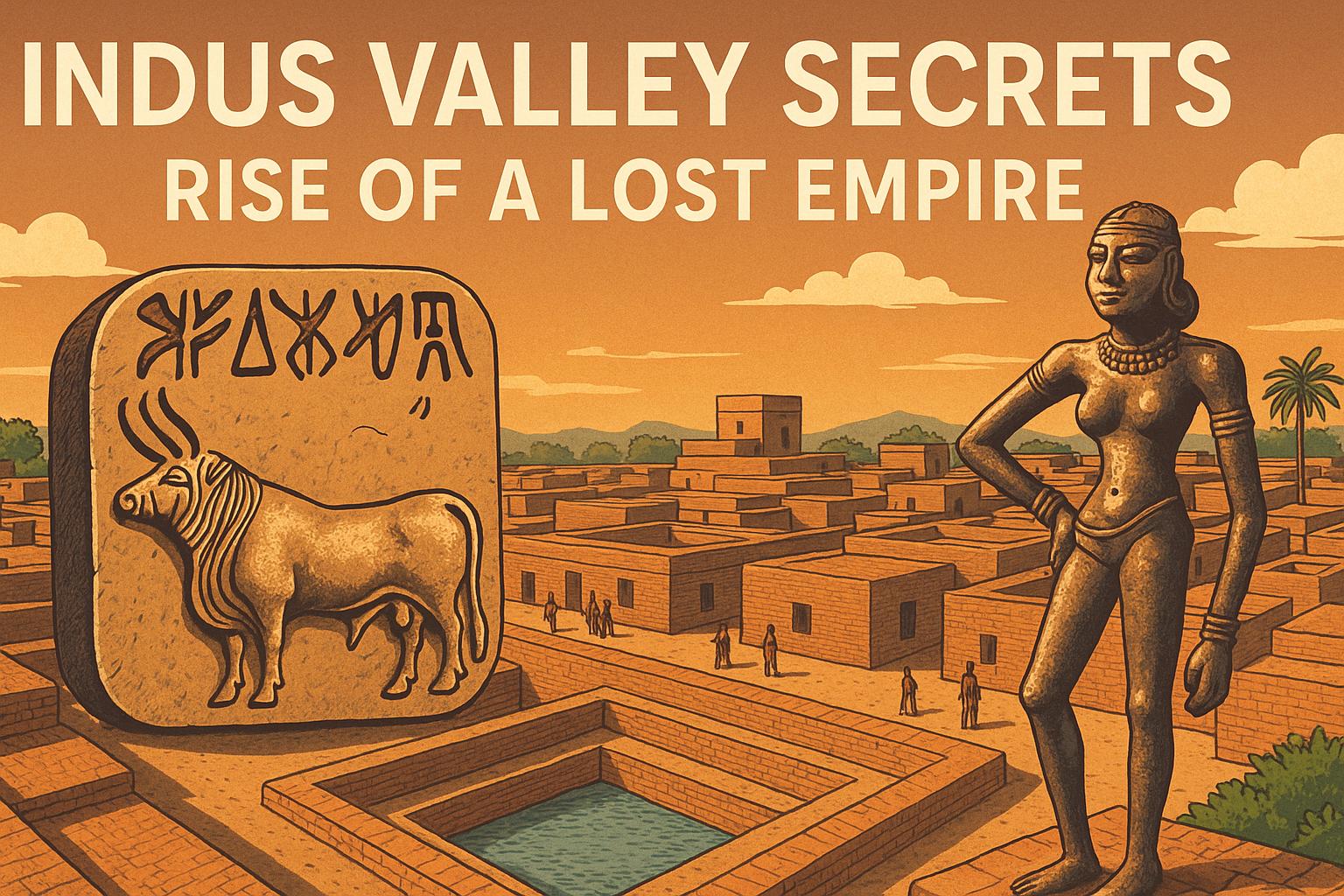
Indus Valley Secrets: Rise of a lost Empire

Illustration of the Indus Valley Civilisation featuring ancient city structures, a large stone seal with a bull and script, the Dancing Girl bronze statue, and people walking near the Great Bath under a warm sunset sky.

Introduction

The Indus Valley stands not just as an archaeological wonder but as a symbol of human resilience, innovation, and silent brilliance. Located in present-day Pakistan and northwest India, this ancient civilization flourished nearly 5,000 years ago, leaving behind a legacy that continues to fascinate historians, archaeologists, and dreamers alike.

Unlike many ancient empires that crumbled due to conquest or chaos, the Indus Valley tells a quieter story—one of evolution, adaptation, and mystery.


Origin and Expansion Of Indus Valley

The Indus Valley civilization began around 3300 BCE in the fertile plains of the Indus River. With its advanced urban planning, clean water supply, and organized trade networks, it rapidly grew into one of the most powerful societies of its time.

Its major cities—HarappaMohenjo-daro, and Dholavira—weren’t just population hubs. They were planned powerhouses, equipped with public baths, complex drainage systems, and standardized bricks that showed remarkable engineering consistency.


Culture and Society

Despite lacking grand monuments or flashy empires, the Indus Valley had a culture rich in emotional depth and social harmony. Archaeological findings suggest they lived in a peaceful and egalitarian society. Weapons were rare, and artistic expressions were abundant—seen in seals, pottery, figurines, and jewelry.

From their script etched in symbols to delicate craftsmanship in bead-making, every artifact whispers a tale of creative brilliance and silent resilience.


Trade and Innovation in Indus Valley

The Indus Valley didn’t survive on isolation. It thrived through vibrant trade networks that connected it to distant Mesopotamia and the Persian Gulf. Goods like lapis lazuli, copper, ivory, and textiles were exchanged with pride and precision.

Their measurement systems, weights, and seals show a deep understanding of mathematics and administration—far ahead of their time.


Mysterious Decline

Perhaps the most emotionally gripping chapter in the story of the Indus Valley is its unexplained decline around 1900 BCE. Unlike dramatic collapses seen in other civilizations, the Indus Valley faded away silently.
Theories suggest climate change, shifting rivers, or even tectonic activity may have forced its peaceful people to migrate. But no one knows for sure.
The absence of war or destruction adds a haunting power to its end—like a candle that quietly extinguished.


Legacy and Rediscovery of Indus Valley

Though lost for millennia, the Indus Valley was rediscovered in the 1920s, reshaping our understanding of ancient history. Its planned cities, water management systems, and social structures continue to inspire modern architects, historians, and thinkers.

This legacy reminds us that power does not always roar—sometimes, it whispers through time, waiting to be heard by those who dare to listen.


Conclusion

The Indus Valley is more than ruins and relics. It is a testament to human brilliance, a legacy of peace, and a chapter of history that refuses to be forgotten. As we unearth more, we rediscover not just an ancient civilisation—but our own roots of innovation, harmony, and silent strength.

ALSO READ ABOUT CHANTAL TROPICAL STORM


Posted on Leave a comment

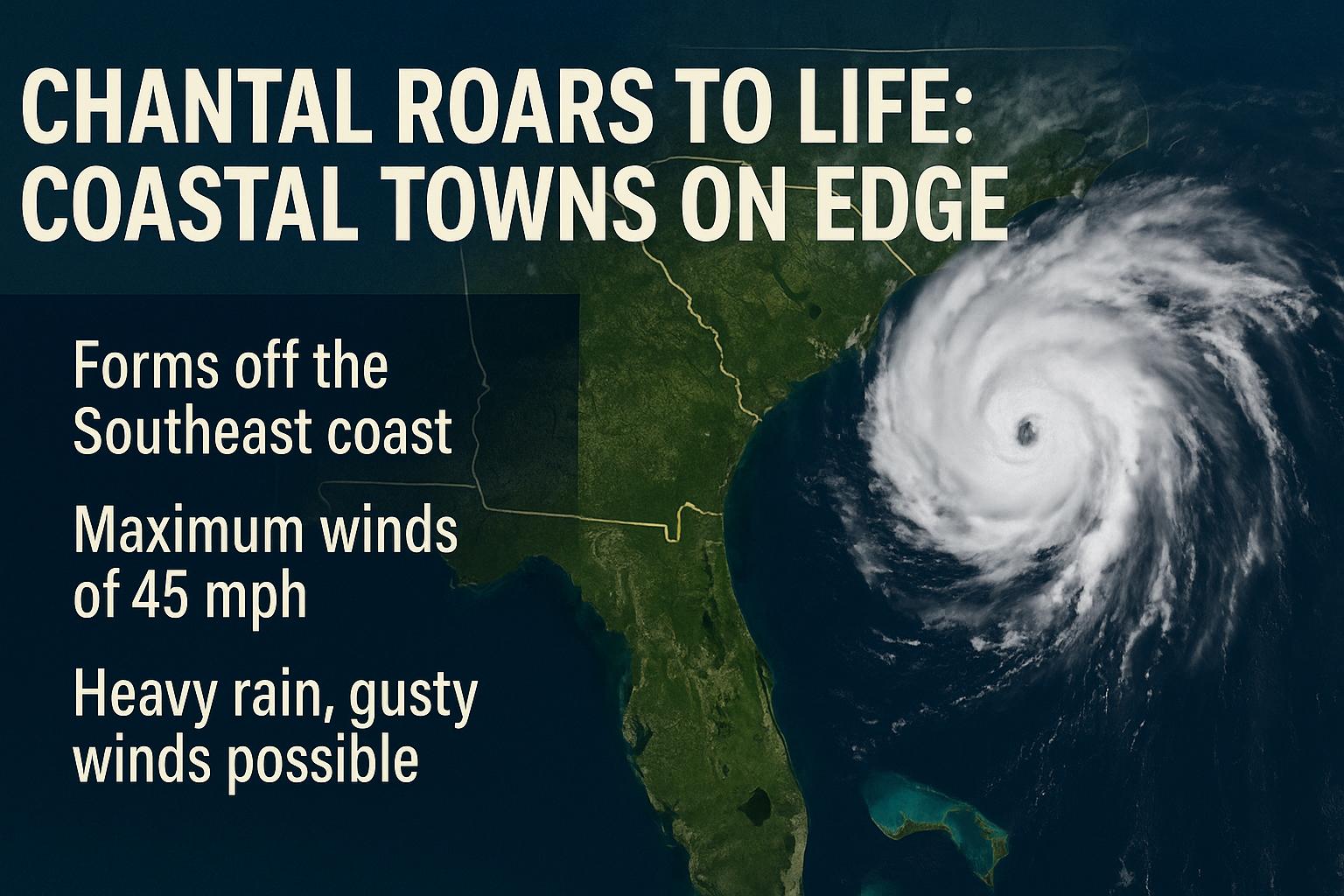
Chantal Roars to Life: Coastal Towns on Edge

Weather update graphic showing Tropical Storm Chantal forming off the Southeast U.S. coast, with swirling satellite imagery, wind speeds of 45 mph, and warnings for coastal towns under the headline 'Chantal Roars to Life: Coastal Towns on Edge.

🌪 Introduction: Chantal Takes Center Stage

When it comes to Atlantic storm systems, timing and location are everything. This week, Chantal made a surprise appearance off the Southeast coast of the United States. While the system wasn’t initially expected to intensify, it quickly gained strength over warm ocean waters. As a result, this storm is now under close observation due to its potential effects on nearby coastal areas.


🌊 Where Chantal Formed and Why It Matters

Chantal developed from a low-pressure disturbance in the Atlantic, just southeast of the Carolinas. Within a short span, it organized into a tropical storm. This rapid transformation highlights how unpredictable such systems can be, especially during the height of hurricane season.

Although Chantal may not make direct landfall, its outer bands could still affect coastal weather. Therefore, residents along the shorelines are urged to stay informed and alert.


📍 Chantal’s Current Position and Behaviour

The storm is currently swirling approximately 150 miles off the Southeast U.S. coast. It’s moving northeast, slowly but steadily. Even if it remains offshore, Chantal could still deliver rough seas, gusty winds, and scattered downpours to states like South Carolina, Georgia, and North Carolina.

Importantly, this storm is not classified as a major hurricane. Still, any tropical storm with unpredictable behavior demands respect and awareness.


🌀 What Makes Chantal Unusual

Unlike many named storms that form deeper in the Atlantic, Chantal emerged unusually close to the U.S. mainland. That alone sets it apart. Moreover, it intensified rather quickly, thanks to unusually warm sea surface temperatures.

Such developments are becoming more common in recent years. Consequently, storms like this reflect the evolving patterns of our climate and the need for advanced forecasting systems.


🌧️ What to Expect From This Storm

Here’s what locals and tourists should be prepared for:

  • Intermittent rain showers in coastal areas
  • Choppy seas and dangerous rip currents
  • Brief gusts of wind, possibly between 30–40 mph
  • Low-level flooding in poorly drained coastal zones

While this storm is not catastrophic, ignoring its presence would be unwise. Even weak systems can disrupt travel, damage small boats, or impact beach safety.


🔄 How Authorities Are Responding to the Storm

Emergency management teams in affected states have begun issuing updates and safety guidance. Lifeguards are warning swimmers of high surf risks, and ferry services in some areas are experiencing delays. As always, it’s better to prepare early rather than scramble later.


🌍 Chantal and the Bigger Picture

Every storm tells a story. Chantal’s arrival reminds us how quickly the weather can shift and why early detection matters. As part of an already active season, this storm is just one of many potential systems that could emerge in the weeks ahead.

Therefore, experts continue to urge coastal residents to keep their hurricane kits ready, follow trusted weather sources, and never underestimate a named storm—even one that stays offshore.


✅ Conclusion: Staying Safe While the Moves On

Chantal may not break records, but it certainly commands attention. With shifting winds, changing water temperatures, and the unpredictability of nature, Chantal stands as a timely reminder: storm readiness is not just a choice—it’s a necessity.

ALSO READ ABOUT TRUMPS’S BIG BEAUTIFUL BILL


Posted on Leave a comment

Trump’s Big Beautiful Bill Sparks Passion and Protest throughout world

Cartoon-style illustration representing Trump’s Big Beautiful Bill, featuring the U.S. Capitol, a tax cuts folder, a large bill document, dollar stacks, and a border officer in front of a wall.

🏛️ What Is Trump’s Big Beautiful Bill?

Trump’s Big Beautiful Bill is a sweeping tax and spending proposal championed by former President Donald Trump. Passed by the U.S. House of Representatives in July 2025, the bill aims to reshape America’s economic and immigration landscape in one bold stroke.

This legislation isn’t just another policy—it’s a vision. One that’s inspiring some and alarming others.


Key Tax Reforms Introduced by Trump’s Big Beautiful Bill

At its core, Trump’s Big Beautiful Bill revives and extends major tax cuts introduced during Trump’s first term, especially for corporations and high-income earners. Here’s what it includes:

  • Corporate tax cuts extended for another decade
  • Middle-class tax relief promised—but critics argue it’s minimal
  • Repeal of certain green energy incentives
  • Increased tax credits for families with children

💡 Transition: While tax policies are always a hot topic, the bill doesn’t stop at just numbers—it dives into controversial territory next.


Immigration Enforcement Gets a Big Boost

One of the most emotionally charged parts of Trump’s Big Beautiful Bill is its strict stance on immigration. The bill directs billions toward:

  • Border wall expansion and maintenance
  • Hiring thousands of new immigration enforcement agents
  • Establishing new detention facilities
  • Cutting funds for sanctuary cities

Supporters hail this as “protecting American jobs and safety,”
Critics call it “inhumane and politically motivated.”


What Does the Bill Mean for the National Debt?

According to the Congressional Budget Office, Trump’s Big Beautiful Bill could increase the national debt by $3.4 trillion over 10 years.

🔍 Economists are divided:

  • Some argue it stimulates growth by cutting taxes
  • Others warn it will balloon deficits and hurt long-term financial stability

Who Wins and Who Loses?

🟢 Winners:

  • Large corporations
  • Wealthy Americans
  • Construction and border security contractors
  • Republican lawmakers in border states

🔴 Losers:

  • Environmental programs
  • Urban communities relying on federal funds
  • Future taxpayers burdened by debt

📢 Transition: But beyond money and walls, there’s something deeper at play—the emotional current of American identity.


A Polarizing Vision for America

Trump’s Big Beautiful Bill is more than legislation; it’s a statement of values. It appeals to voters seeking strength, control, and tradition—but it alienates those who view inclusion and sustainability as core principles.

💬 Public reaction has been passionate:

“It’s about time someone put America first again.” — A supporter

“This is cruelty wrapped in a budget.” — A critic


🔚 Conclusion: What’s Next for Trump’s Big Beautiful Bill?

Now that the bill has passed the House, the Senate and judiciary may pose obstacles. But the real battleground may be the 2026 election, where this bill could become a defining issue.

Whether you’re inspired or outraged, one thing is clear—Trump’s Big Beautiful Bill is reshaping the American political conversation.

AlSO READ: GUKESH BEATS MAGNUS


Posted on Leave a comment

Gukesh Stuns the World: Beating Carlsen Twice in 2025

Digital illustration showing Indian chess grandmaster Gukesh, wearing a white shirt and looking confident, seated across from Magnus Carlsen, who appears frustrated. A chessboard sits between them, symbolizing their 2025 matches. Bold text reads: “Gukesh Defeats Carlsen Twice, Ignites a Chess Revolution.”

Digital illustration showing Indian chess grandmaster Gukesh, wearing a white shirt and looking confident, seated across from Magnus Carlsen, who appears frustrated. A chessboard sits between them, symbolizing their 2025 matches. Bold text reads: “Gukesh Defeats Carlsen Twice, Ignites a Chess Revolution.”

In 2025, Indian chess prodigy D Gukesh has captured the attention of the global chess community with not just skill but sheer determination. At just 19, Gukesh is proving that the future of chess may well belong to the next generation—and he’s doing it by taking down the legends.

A Bold Journey of Gukesh to the Top

Born in Chennai, Tamil Nadu, Gukesh D has been passionate about chess since he was a child. His rise to fame has been swift, but not without effort. Hard work, intense practice, and a deep love for the game have made him one of the most exciting young talents in modern chess.

In 2019, he became the second-youngest Grandmaster in history. Since then, he has continued to climb the ranks, consistently challenging seasoned players across the globe.

World Champion Gukesh is Breaking Barriers in 2025

This year, Domaraju has turned heads with back-to-back victories over none other than former world champion Magnus Carlsen—a feat few can claim.

Victory in Classical Chess – Norway Chess 2025

On June 1, 2025, Gukesh made headlines by defeating Carlsen in a classical game at the prestigious Norway Chess tournament. Carlsen, who was in a commanding position for most of the game, faltered in the final moments. Under extreme time pressure, the Norwegian legend blundered with a misplaced knight move—52…Ne2+—handing Gukesh a golden opportunity.

The young Indian did not miss. He played with precision and calm, ultimately scoring his first-ever classical win against Carlsen. The chess world was stunned. It wasn’t just about the win—it was about how calmly and fearlessly D.Gukesh handled the pressure.

Rapid Fire Win – SuperUnited Croatia 2025

If the classical win was a breakthrough, his next triumph was confirmation. On July 3, 2025, during the SuperUnited Rapid & Blitz tournament in Croatia, Gukesh again outplayed Carlsen—this time in the rapid format.

Carlsen, who had confidently predicted an easy ride against the younger players, found himself outmaneuvered and outwitted. His opening play was sharp, and his midgame tactics showed maturity beyond his age. After 49 intense moves, Carlsen resigned, and the chessboard told a clear story: Gukesh was not here to be a future champion—he was already one.

Why These Wins Matter

Beating Magnus Carlsen in any format is a massive achievement. Doing it in both classical and rapid games within a short span is almost unheard of for someone this young.

Carlsen has been the gold standard in chess for over a decade. For Gukesh to match, and even outplay him, is a sign of a changing era. It’s no longer just about experience—it’s about innovation, courage, and a fresh way of thinking.

A Role Model for Youth

Gukesh’s journey is more than just a sports story. It is about what belief, discipline, and persistence can achieve. Young players across India—and the world—now look up to him not just as a Grandmaster, but as a symbol of what’s possible when you dare to dream big.

His success has also sparked renewed interest in chess among students and young minds, especially in India, where chess has deep cultural roots.


In Conclusion

Gukesh D is no longer the underdog. He is writing his own legacy, one game at a time. By defeating the seemingly unbeatable Magnus Carlsen twice in 2025, Gukesh has shown us that the torch of greatness is ready to be passed—and he’s more than ready to carry it.

Whether in classical silence or rapid fire, one thing is certain—Gukesh’s moves are speaking louder than words.


Also read about RSS around the world


Posted on Leave a comment

RSS Builds a Better World with Duty and Determination

Illustration of RSS volunteers contributing to global welfare with a message "RSS Builds a Better World with Duty and Determination" on an orange background.Illustration of RSS volunteers contributing to global welfare with a message "RSS Builds a Better World with Duty and Determination" on an orange background.

The Rashtriya Swayamsevak Sangh (RSS), founded in 1925, is one of the largest volunteer-based socio-cultural organizations in the world. While often associated with its presence in India, the RSS has quietly expanded its philosophy, service programs, and cultural initiatives across continents.

This article explores the originsmission, and the far-reaching Rashtriya Swayamsevak Sangh work around the world.


The Ideological Roots of RSS

Founded by Dr. Keshav Baliram Hedgewar in Nagpur, RSS was formed to instill disciplineunity, and a sense of national identity rooted in Indian culture and values. Its daily shakhas (training sessions) involve physical fitnessmoral education, and volunteerism.

Key principles include:

  • Selfless service (sewa)
  • Cultural pride and heritage
  • National integration and social harmony

RSS Work Around the World

Contrary to popular belief, RSS is not confined to India. Through its affiliated international wings like the HSS (Hindu Swayamsevak Sangh), it has expanded to 40+ countries, working on humanitarian, cultural, and educational initiatives.


RSS in the United States

  • HSS USA conducts weekly shakhas in 100+ cities
  • Organizes youth leadership campsyoga sessions, and blood donation drives
  • Promotes Hindu culture education for children through Balagokulam
  • Actively supports disaster relief and food distribution programs

Notable events:

  • Yoga Day Celebrations in collaboration with community groups
  • “Sewa Diwali” – Food drive that collected over 750,000 pounds of food in 2023

RSS in the UK and Europe

  • Operates under Hindu Swayamsevak Sangh UK
  • Engages in cultural festivals, volunteerism, and anti-drug awareness campaigns
  • Trains youth in discipline, character building, and community leadership
  • Partnered with UK charities during COVID-19 lockdowns for food and medicine delivery

RSS in the Middle East

  • Active in countries like UAE, Oman, Bahrain, and Qatar
  • Focuses on community building among Indian expatriates
  • Organizes blood donation campsspiritual talks, and family support programs
  • Keeps Indian traditions alive among second-generation youth abroad

📌 RSS in Australia and Southeast Asia

  • Promotes Hindu heritage awareness among children
  • Conducts environmental clean-upstree-planting drives, and cultural workshops
  • Celebrates Indian festivals like Raksha Bandhan, Diwali, and Holi in multicultural settings
  • Collaborates with local councils on interfaith events

Notable Global Initiatives

Program Region Focus Area
Sewa Diwali USA & Canada Food drives, community outreach
Balagokulam Global Hindu culture education for kids
Sampark Project UK Inter-community dialogue & relations
Disaster Relief Fund Global Earthquake, flood, and pandemic relief

What Makes RSS Work Globally Effective?

  • Grassroots Structure: It operates at the local level, empowering communities directly.
  • Cultural Relevance: Emphasizes cultural identity, making it easier to connect with the diaspora.
  • Service-Oriented: Focus on Sewa (selfless service) resonates across humanitarian causes.
  • Low-Cost, High-Impact: Most programs are volunteer-driven, reducing costs and increasing trust.

Criticism and Clarification

While RSS has been praised for its community service, it has also faced criticism and political accusations, especially within India. However, internationally, the focus remains largely on charity, education, and cultural cohesion, devoid of political activity.

Affiliates like HSS clearly state that they are non-political, volunteer-run, and independent in operations, focused solely on social and cultural enrichment.


Final Thoughts

The RSS work around the world is a story of how a grassroots movement, rooted in discipline, tradition, and unity, can transcend borders. Whether through education, service, or cultural outreach, the sangh has left an indelible mark on the global Indian diaspora.

In a world where identity and community are often lost in migration, Rashtriya Swayamsevak Sangh has provided a sense of belonging and purpose—with discipline, humility, and resilience.

ALSO READ ABOUT ISRO


Posted on Leave a comment

ISRO pioneering Missions: From earth to the stars

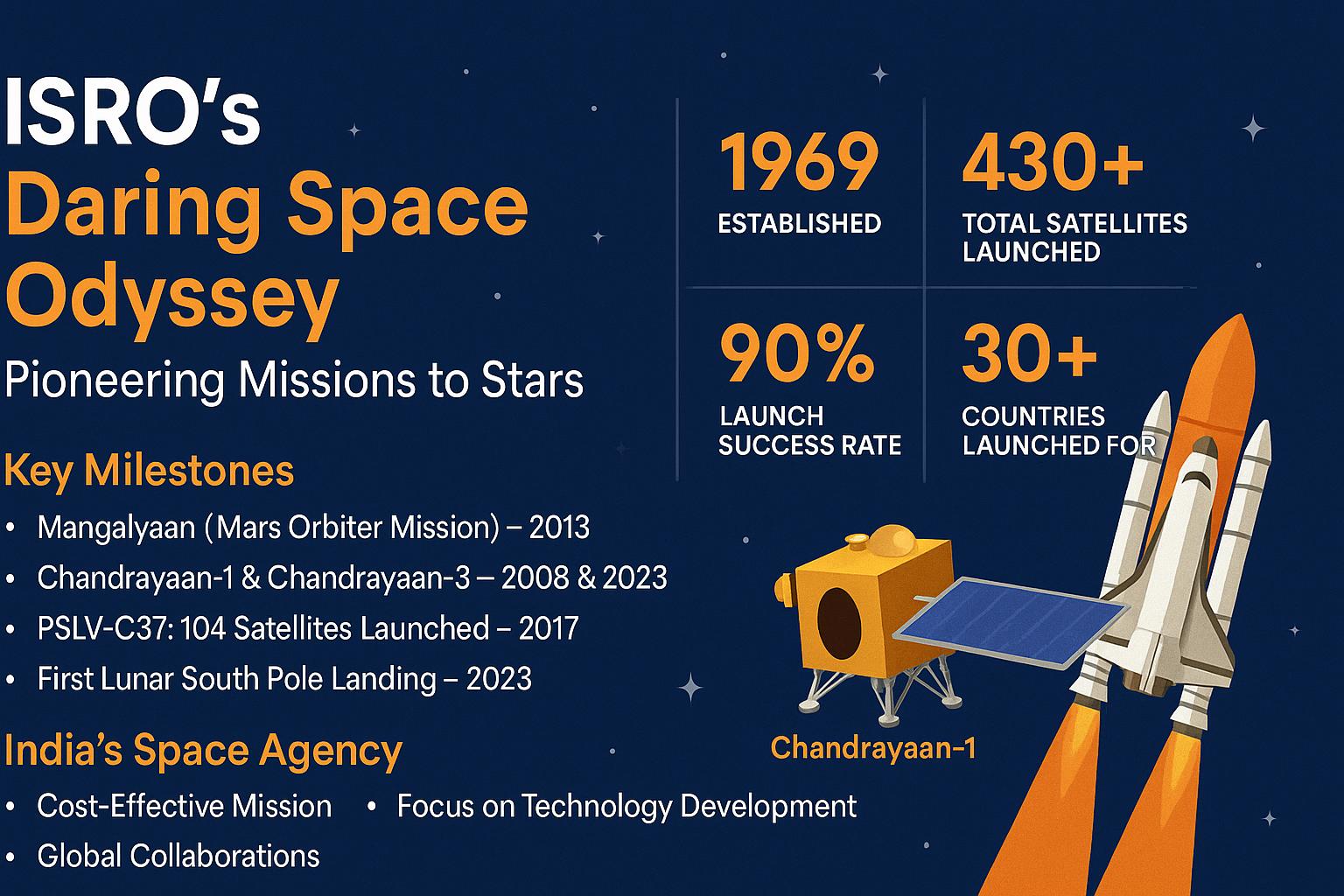
Infographic showing ISRO major space achievements including Chandrayaan, Mangalyaan, total satellites launched, and India's 90% mission success rate.

India’s space dream took flight with a humble start, but today, the Indian Space Research Organisation (ISRO) is one of the most respected and rapidly advancing space agencies in the world. With its cost-effective missionsbreakthrough technologies, and record-setting launches, ISRO has become a symbol of national pride and global admiration.

This article dives into the historymilestones, and recent ISRO achievements that are turning heads globally.


The Beginning of a Vision

Founded on August 15, 1969, under the visionary guidance of Dr. Vikram Sarabhai, ISRO was created to harness space technology for national development. Unlike other agencies racing to conquer space, the organisation was missioned with solving Earth’s problems—weather forecastingcommunication, and resource mapping.


ISRO Achievements That Changed History

1. Mangalyaan (Mars Orbiter Mission) – 2013

  • India became the first Asian nation to reach Mars, and the only country to do it on its first attempt.
  • Cost: Only $74 million, cheaper than a Hollywood movie.
  • Proved India’s capability in deep space exploration.

2. Chandrayaan-1 & Chandrayaan-3 – 2008 & 2023

  • Chandrayaan-1 discovered water molecules on the Moon.
  • Chandrayaan-3 successfully landed near the lunar south pole in 2023 — making India the first nation to do so.

3. PSLV-C37 – 2017: Record-Breaking Launch

  • Launched 104 satellites in a single mission, a world record.
  • Demonstrated India’s multi-payload precision technology.

4. NavIC Satellite System

  • India’s own regional navigation system, similar to GPS.
  • Crucial for militarycivilian, and disaster management applications.

5. Gaganyaan Mission (Upcoming)

  • Aims to send Indian astronauts into space using an indigenously built spacecraft.
  • Expected to mark India’s entry into human spaceflight.

ISRO by the Numbers

Parameter Value
Founded 1969
Missions Completed 120+
Budget (2024–25) ₹13,000+ crore (~$1.6 billion)
Launch Success Rate ~92%
Total Satellites Launched 430+
Employees ~17,000

🌟 What Sets ISRO Apart?

  • Affordability with Excellence: Known for delivering maximum results with minimal investment.
  • Indigenous Technology: Built most of its rockets, satellites, and launch pads in-house.
  • Global Collaborations: Launched satellites for 30+ countries, including USAUK, and France.
  • Focus on Social Impact: Weather alerts, village mapping, crop monitoring, and telemedicine are just a few examples of ISRO’s ground-level impact.

ISRO’s Global Influence

While this space organisation is rooted in India’s soil, its influence has skyrocketed globally. It plays a key role in international space diplomacy, offers commercial satellite launches, and partners with space giants like NASAESA, and JAXA.


Emotional & National Impact

For millions of Indians, Indian Space Research Organisation is more than a space agency. It’s a source of inspiration, showing what’s possible when ambition meets innovation. Every mission it launches lights up not just the sky, but also the hopes of a billion people.


What’s Next?

  • Gaganyaan (Human Spaceflight) – 2025
  • Shukrayaan-1 (Venus Mission) – under planning
  • Space Station by 2035
  • Reusable Launch Vehicle (RLV) testing
  • Deep Space Exploration missions including Sun & interstellar missions

Final Words

The story of Indian Space Research Organisation is not just about rockets and space—it’s about resilience, dreams, and a burning desire to uplift humanity. Its achievements have proven that space exploration isn’t just for the wealthy nations, but for anyone with vision, dedication, and courage.

The achievements are not just technical victories; they’re emotional triumphs that reflect India’s unstoppable spirit.

ALSO READ ABOUT: TRUMP MUSK FEUD