Introductionto Modi’s Global Mission
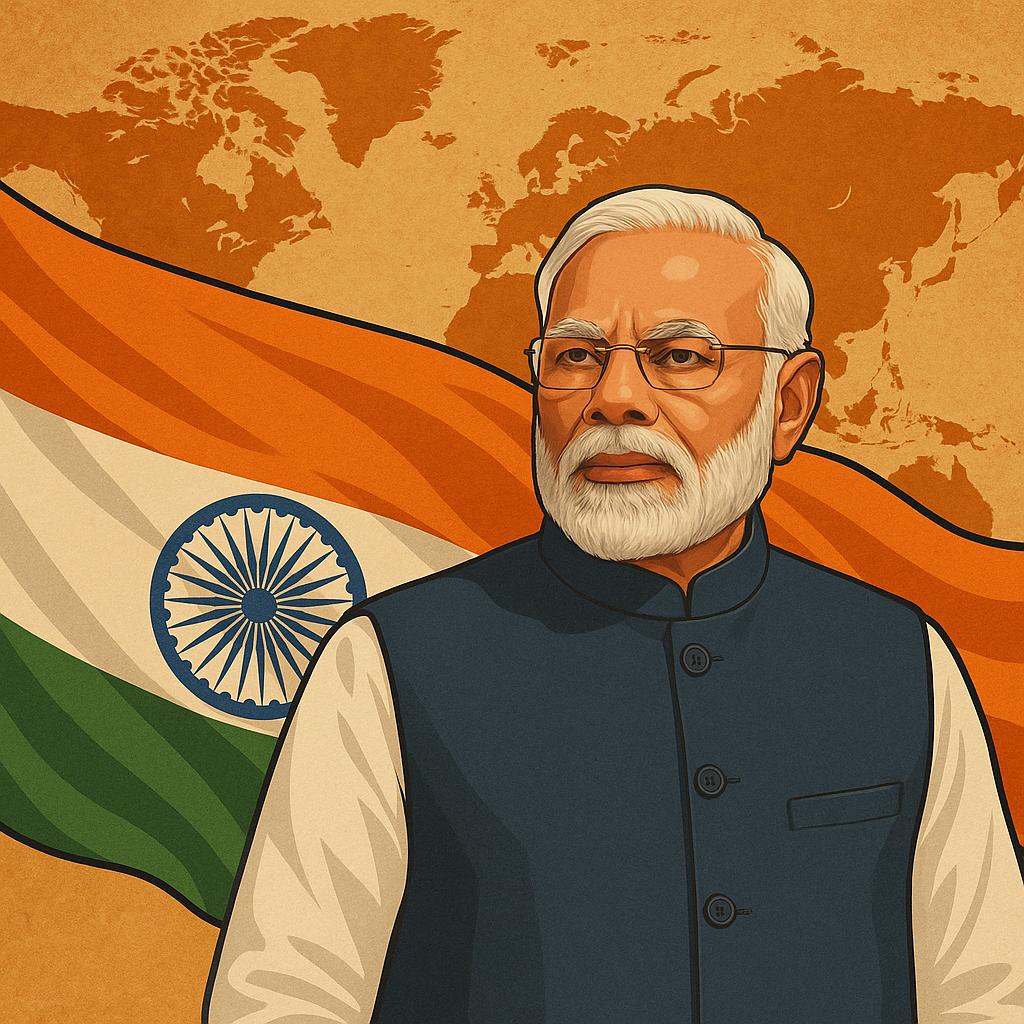
India is no longer just a participant in global affairs, through Modi’s Global Mission —it’s becoming a decisive global force. Prime Minister Narendra Modi’s recent overseas tours reflect a bold new era of diplomacy—one centered on strength, pride, peace, and prosperity.
India is reshaping alliances, building powerful trade ties, and restoring civilizational respect. At every stop, world leaders are not only talking trade but are also honoring PM Modi for his vision and India’s growing global role.
Countries Visited and Honors Received
Below is a detailed look at the countries visited under Modi’s Global Mission, their outcomes, and the respects and recognitions PM Modi received:
🇷🇺 Modi’s Global Mission in Russia – Strategic Revival
- City Visited: Moscow
- Purpose: To deepen defense cooperation and energy deals amid global realignments.
- Outcome: Renewed the Indo-Russian Long-Term Energy Pact; discussions on nuclear reactors and BrahMos exports.
- Honor: Modi was awarded the Order of St. Andrew, Russia’s highest civilian honor, for strengthening Indo-Russian ties.
🇦🇹 PM Modi’s Global Mission in Austria – 75 Years of Relations
- City Visited: Vienna
- Purpose: First Indian PM to visit in over 40 years; aimed at technology, renewable energy, and skill development cooperation.
- Outcome: MoUs on hydrogen, startup exchanges, and dual degrees for Indian students.
- Honor: Received the Golden Badge of Honor from Austria’s Parliament—a rare tribute for global leadership.
🇮🇹 Italy – G7 & Global Governance
- City Visited under PM Modi’s Global Mission: Apulia (G7 Summit)
- Purpose: India was a special invitee to G7 Outreach; PM Modi pitched digital democracy and climate balance.
- Outcome: Indian Green Hydrogen Mission featured in G7 outcomes; new Indo-Italian fashion sustainability initiative launched.
- Honor: Hosted as the “Voice of the Global South” in G7 sessions—an indirect nod to India’s rising status.
🇦🇪 PM Modi’s Global Mission in United Arab Emirates – Economic Expansion
- City Visited: Abu Dhabi
- Purpose: Strengthen economic and diaspora bonds under CEPA (Comprehensive Economic Partnership Agreement).
- Outcome: CEPA 2.0 launched, enabling rupee-dirham trade and low-tariff corridors for small businesses.
- Honor: Modi received the Zayed Medal, UAE’s highest civilian award, and addressed over 60,000 Indian expats at a grand diaspora event.
🇧🇷 Brazil – Reinvigorating BRICS
- City Visited: Brasília
- Purpose: Attend special BRICS+ summit to expand dialogue among developing nations.
- Outcome: India and Brazil proposed a New South-South Digital Infrastructure Fund, enhancing cooperation in fintech and e-health.
- Honor: Brazilian Parliament passed a resolution calling PM Modi the “Ambassador of the Global South.”
🇯🇵 Japan – Tech & Security Boost
- City Visited: Tokyo
- Purpose: Strengthen semiconductor production partnerships and Indo-Pacific security.
- Outcome: Launched “AI Indo-Japan Connect 2040” and expanded naval exercises.
- Honor: Japan conferred the Order of the Rising Sun, Gold and Silver Star on Modi, recognizing his efforts to build Indo-Pacific stability.
Future Trips Under Modi’s Global Mission
📌 United States – September 2025
To attend the Indo-Pacific Economic Dialogue and hold talks with G7 nations and Big Tech CEOs on digital security, space, and AI.
📌 South Africa – October 2025
For the G20–BRICS Unification Summit, where India will co-lead a proposal to align development finance with climate and equity.
📌 Australia – November 2025
To explore green rare-earth mining and strengthen university-level exchange programs.
📌 Bangladesh & Nepal – December 2025
To consolidate India’s Neighborhood First Policy and finalize river management pacts.
Geopolitical Significance of Modi’s Global Mission
- Multi-Polar World Vision
India is building balanced ties with both the West (G7, Japan, USA) and East (Russia, BRICS). This makes India a neutral peace broker. - Global South Leadership
Modi champions the voice of developing nations, demanding fair climate financing and equitable trade policies. - Tech & Talent Powerhouse
From semiconductors in Japan to startups in Austria, India is promoting its youth-driven innovation ecosystem worldwide. - Defense & Maritime Security
Through stronger Indo-Pacific engagements and naval cooperation, India is ensuring open and safe sea routesfor global trade.
Economic Benefits of Modi’s Global Mission
- New FDI Inflows: Over $30 billion pledged from G7+UAE visits
- Startup Corridors: India now has tech and innovation corridors with Austria, Japan, and Italy
- Trade in Local Currencies: Initiated with UAE, proposed with Brazil and Russia
- Green Energy Partnerships: India is now part of a 5-country alliance for hydrogen and solar energy with Austria and Italy
Emotional Connections & Cultural Diplomacy
Modi’s Global Mission isn’t just about policies—it’s about people and pride.
- In every country, he met with the Indian diaspora, shared cultural performances, and emphasized Bharatiya Sanskriti.
- From performing aarti in Abu Dhabi to referencing Swami Vivekananda in Vienna, he carried India’s soul with him.
Conclusion
Modi’s Global Mission is more than a diplomatic calendar—it is a blueprint for India’s rise as a peaceful, powerful, and purposeful nation. By blending ancient values with modern strategy, PM Modi is crafting a future where India is not just heard, but revered.
Each visit under this mission adds a chapter of respect, resilience, and resurgence to India’s global story.
AlSO READ ABOUT INDUS VALLEY CIVILIZATION