Posted on Leave a comment

Indus Valley Secrets: Rise of a lost Empire

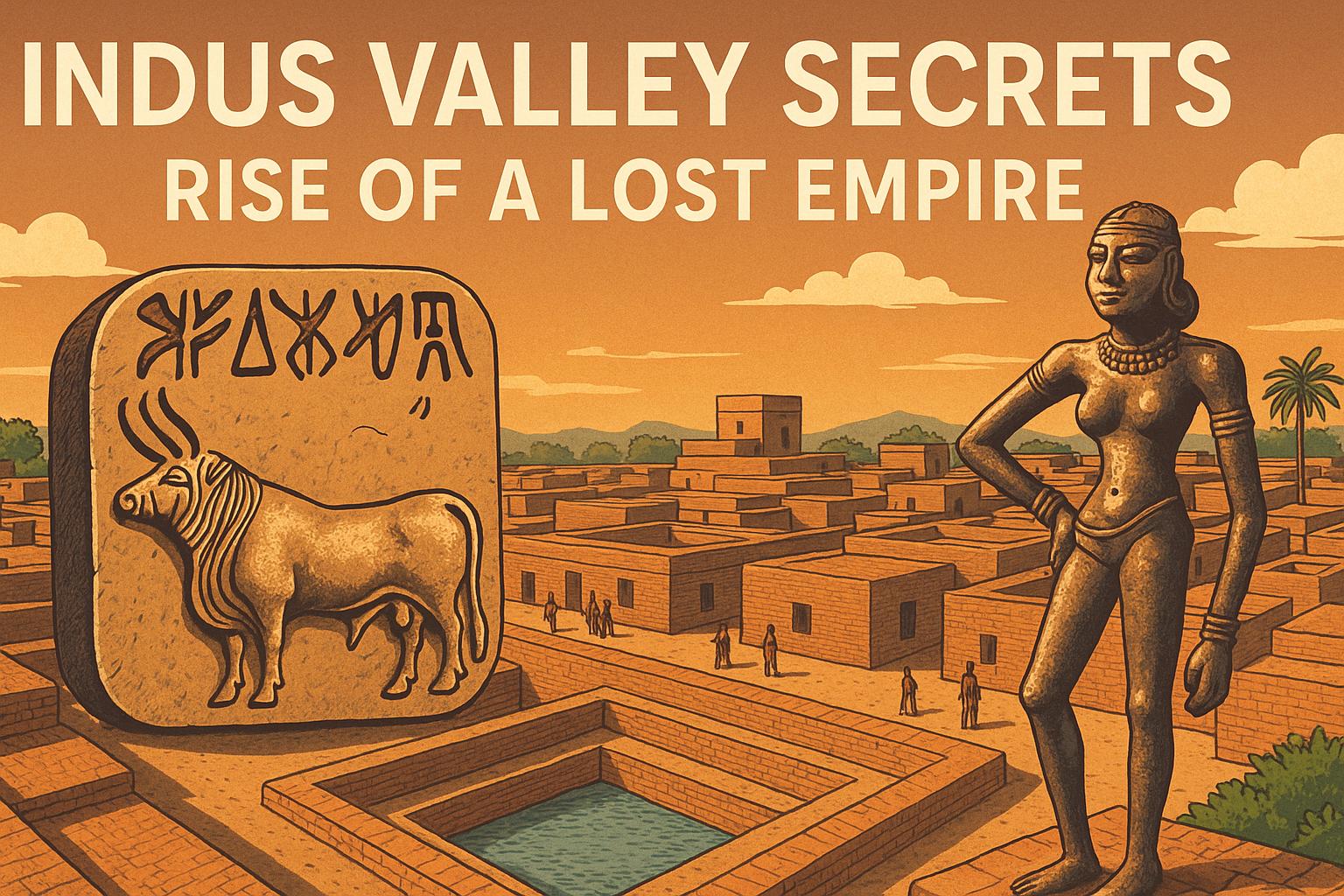
Illustration of the Indus Valley Civilisation featuring ancient city structures, a large stone seal with a bull and script, the Dancing Girl bronze statue, and people walking near the Great Bath under a warm sunset sky.

Introduction

The Indus Valley stands not just as an archaeological wonder but as a symbol of human resilience, innovation, and silent brilliance. Located in present-day Pakistan and northwest India, this ancient civilization flourished nearly 5,000 years ago, leaving behind a legacy that continues to fascinate historians, archaeologists, and dreamers alike.

Unlike many ancient empires that crumbled due to conquest or chaos, the Indus Valley tells a quieter story—one of evolution, adaptation, and mystery.

Origin and Expansion Of Indus Valley

The Indus Valley civilization began around 3300 BCE in the fertile plains of the Indus River. With its advanced urban planning, clean water supply, and organized trade networks, it rapidly grew into one of the most powerful societies of its time.

Its major cities—HarappaMohenjo-daro, and Dholavira—weren’t just population hubs. They were planned powerhouses, equipped with public baths, complex drainage systems, and standardized bricks that showed remarkable engineering consistency.


Culture and Society

Despite lacking grand monuments or flashy empires, the Indus Valley had a culture rich in emotional depth and social harmony. Archaeological findings suggest they lived in a peaceful and egalitarian society. Weapons were rare, and artistic expressions were abundant—seen in seals, pottery, figurines, and jewelry.

From their script etched in symbols to delicate craftsmanship in bead-making, every artifact whispers a tale of creative brilliance and silent resilience.


Trade and Innovation in Indus Valley

The Indus Valley didn’t survive on isolation. It thrived through vibrant trade networks that connected it to distant Mesopotamia and the Persian Gulf. Goods like lapis lazuli, copper, ivory, and textiles were exchanged with pride and precision.

Their measurement systems, weights, and seals show a deep understanding of mathematics and administration—far ahead of their time.


Mysterious Decline

Perhaps the most emotionally gripping chapter in the story of the Indus Valley is its unexplained decline around 1900 BCE. Unlike dramatic collapses seen in other civilizations, the Indus Valley faded away silently.
Theories suggest climate change, shifting rivers, or even tectonic activity may have forced its peaceful people to migrate. But no one knows for sure.
The absence of war or destruction adds a haunting power to its end—like a candle that quietly extinguished.


Legacy and Rediscovery of Indus Valley

Though lost for millennia, the Indus Valley was rediscovered in the 1920s, reshaping our understanding of ancient history. Its planned cities, water management systems, and social structures continue to inspire modern architects, historians, and thinkers.

This legacy reminds us that power does not always roar—sometimes, it whispers through time, waiting to be heard by those who dare to listen.


Conclusion

The Indus Valley is more than ruins and relics. It is a testament to human brilliance, a legacy of peace, and a chapter of history that refuses to be forgotten. As we unearth more, we rediscover not just an ancient civilisation—but our own roots of innovation, harmony, and silent strength.

ALSO READ ABOUT CHANTAL TROPICAL STORM
 

Posted on Leave a comment

Silk Route: Uncovering the Secrets That Shaped the World

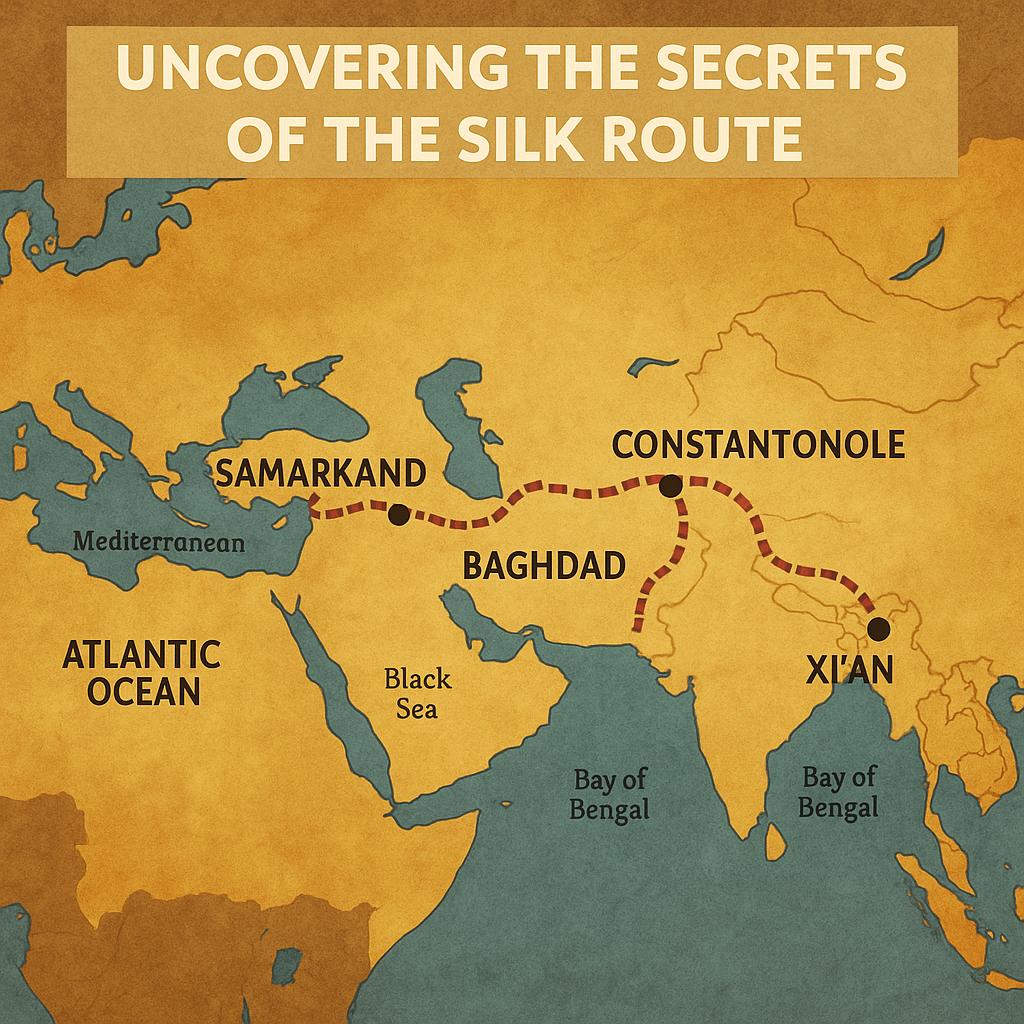
Vintage-style map showing the ancient Silk Route from Xi’an in China to Constantinople, passing through key trade cities like Samarkand and Baghdad, with a red dashed line marking the overland trade path.

The silk route —often referred to as the Silk Road—was not just a single path but a vast network of interconnected trade routes. Spanning thousands of kilometers across Asia, the Middle East, and Europe, it played a monumental role in shaping global history. It connected the East and West through commerce, culture, religion, and diplomacy, serving as the backbone of international trade for over 1,500 years.

Vintage-style map showing the ancient Silk Route from Xi’an in China to Constantinople, passing through key trade cities like Samarkand and Baghdad, with a red dashed line marking the overland trade path.

Origin of the Silk Route

The Silk Route began during the Han Dynasty of China around 130 BCE. Initially, it was a diplomatic initiative to establish connections with Central Asia. However, it quickly evolved into a vibrant commercial highway. The name “Silk Route” comes from the lucrative trade in Chinese silk, a product highly prized in the West.

Silk wasn’t the only commodity traded. Spices, porcelain, tea, precious stones, and paper also moved westward, while horses, wool, glassware, and gold traveled eastward.


Main Trade Routes of the Silk Route

The Route was divided into two primary corridors:

1. The Land Route

This path extended from Xi’an (China) to Antioch (Syria) and further into Europe. It passed through:

  • The Taklamakan Desert
  • Samarkand and Bukhara (in modern-day Uzbekistan)
  • Persian cities like Merv and Nishapur
  • The Middle East, connecting to the Mediterranean ports

2. The Maritime Silk Route

This seaborne version linked South ChinaIndia, and Sri Lanka with Arabia and East Africa, eventually reaching Europe through the Red Sea and Alexandria.


Cultural Exchange Along the Silk Route

While trade was the initial purpose, the Route became a powerful catalyst for cultural diffusion. With merchants came religions like Buddhism, Islam, and Christianity. Art, music, literature, and scientific knowledge also flowed freely between civilizations.

One of the most influential outcomes of the Silk Route was the spread of Buddhism from India to China and Japan. Simultaneously, Chinese inventions such as gunpowder, papermaking, and printing spread westward, transforming societies.


Silk Route and the Rise of Great Cities

Several legendary cities flourished due to the this route:

  • Samarkand: A melting pot of Persian, Indian, and Chinese cultures
  • Kashgar: A crucial hub in Xinjiang for travelers crossing deserts
  • Constantinople (Istanbul): The gateway between Asia and Europe
  • Baghdad: A center of Islamic scholarship and innovation

These cities thrived as trade centers and became the heart of empires and sultanates.


The Decline of the Silk Route

Despite its success, the Route eventually declined in the 15th century, mainly due to:

  • The rise of maritime trade routes by European powers
  • The fall of the Mongol Empire, which had safeguarded overland trade
  • Political instability and invasions, which made the route dangerous

As ships began to dominate global commerce, the overland Silk Route faded into history—but its legacy remained.


The Silk Route Today: A Legacy Reimagined

In recent decades, the Silk Route has gained renewed interest. China’s Belt and Road Initiative (BRI) aims to revive this ancient trade path through modern infrastructure and economic collaboration, connecting over 60 countries under one economic corridor.

Tourism, heritage conservation, and academic research are also breathing new life into Silk Route history, allowing people to rediscover its cultural richness.


Why the Route Still Matters

The Silk Route symbolizes much more than trade. It was the first global highway, enabling dialogue between empires, innovations in technology, and unity in diversity. In a world increasingly divided, the Route reminds us that connection, exchange, and cooperation are the true drivers of human progress.


📌 Quick Facts About the Route

Aspect Details
Origin Han Dynasty, China (~130 BCE)
Length Over 7,000 km (land and sea combined)
Peak Use 1st century BCE to 15th century CE
Key Cities Xi’an, Samarkand, Baghdad, Constantinople
Major Commodities Silk, spices, paper, glass, horses, gold
Legacy Global trade, cultural exchange, religious spread

Conclusion

The Silk Route was more than a trade network—it was a global connector long before globalization. Its story offers lessons in diplomacy, diversity, and interdependence that are still relevant today.

Whether you’re a history enthusiast, a cultural researcher, or a curious traveler, exploring the this Route reveals the powerful ways the past continues to shape the present.

READ MORE ON HISTORY

Posted on Leave a comment

Shocking Secrets of the Maurya Empire That History Forgot

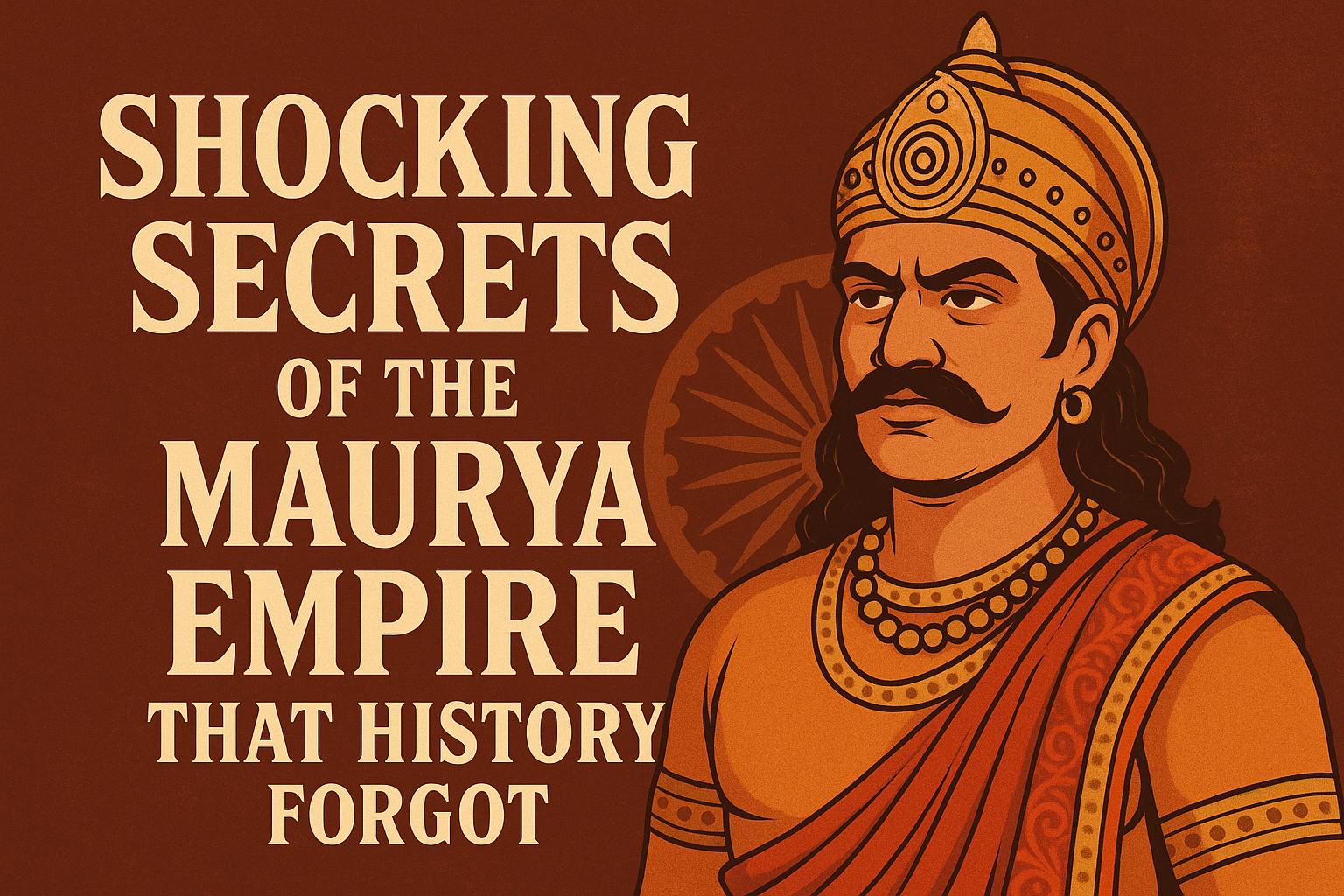
Image related to Maurya Empire

Introduction: Forgotten Maurya Empire With Global Impact

When people talk about ancient empires, names like Rome, Greece, or Egypt usually come up. However, over 2,000 years ago, the Maurya Empire ruled most of India and left a legacy that still lives on. Surprisingly, many know little about this powerful dynasty.

In this article, you’ll uncover the lost secrets of the Maurya Empire, explore its rise and fall, and see why it still matters in today’s world.


The Beginning: How Chandragupta Built an Empire

The story of the Maurya Empire began in 322 BCE. At that time, Chandragupta Maurya, a young and determined man, overthrew the corrupt Nanda dynasty. With help from his advisor Chanakya, he united much of India under one rule.

Importantly, he didn’t just conquer land. He organized it. For instance, he divided his empire into provinces, each managed by skilled governors. Moreover, he built a large army and made sure law and order were maintained throughout the kingdom.

As a result, India had its first real sense of unity.


Chanakya: The Mind Behind the Power

Behind Chandragupta’s success stood Chanakya, also known as Kautilya. He wasn’t just an advisor—he was a master strategist. His book, the Arthashastra, explained how to run a country effectively.

For example, Chanakya offered advice on:

  • Running a spy network
  • Managing taxes
  • Handling war and diplomacy
  • Promoting justice and order

To this day, political experts study Arthashastra for insights into governance and strategy.


Ashoka the Great: From Conqueror to Peacemaker

After Chandragupta, his grandson Ashoka took the throne. At first, Ashoka was a fierce warrior. He fought the Kalinga War, which caused massive death and destruction. But what happened next shocked everyone.

Ashoka felt deep guilt after the war. As a result, he embraced Buddhism and gave up violence. He became one of the world’s first leaders to focus on peace, not war.

From that point on:

  • He promoted kindness, honesty, and tolerance.
  • Ashoka sent Buddhist monks to spread peace across Asia.
  • He planted trees and built rest houses along roads.
  • He carved his teachings on stone pillars, many of which still stand today.

What Made the Maurya Empire So Advanced?

The Maurya Empire wasn’t just large. It was smart and forward-thinking. Here are some reasons why:

1. Strong Administration

Chandragupta built a system where officials reported directly to the king. Each province had its own courts, tax collectors, and local guards.

2. Thriving Economy and Trade

The empire encouraged trade, both within India and with faraway lands like Greece and China. They exported spices, textiles, and precious stones.

3. Well-Planned Cities

Cities such as Pataliputra featured wide roads, drainage systems, and strong fortifications. Clearly, city planning was a priority.

4. Religious Freedom

Although Ashoka followed Buddhism, he supported all religions. He believed people should follow their own path as long as it led to good conduct.


Why the Maurya Empire Still Matters Today

You might wonder: Why should we care about an empire from 2,000 years ago? The answer is simple.

The Maurya Empire helped shape modern India. For example:

  • India’s idea of being one country started with Chandragupta’s rule.
  • Ashoka’s legacy inspired leaders like Mahatma Gandhi.
  • The Indian national flag features the Ashoka Chakra, a symbol of truth and justice.
  • Today, many leadership principles from that era still influence Indian politics and governance.

Did You Know?

  • Chandragupta gave up his throne to become a Jain monk.
  • Ashoka once had the nickname “Ashoka the Cruel” before his transformation.
  • The Maurya Empire was once larger than the Roman Empire at its peak.
  • The Arthashastra mentions topics like environmental protection and welfare programs!

Conclusion: A Legacy Worth Remembering

In conclusion, the Maurya Empire was more than just a ruling dynasty. It created a blueprint for governance, justice, and peaceful leadership. From uniting the Indian subcontinent to spreading values of compassion, this ancient empire made a lasting mark on history.

Although many people have forgotten its story, its ideas continue to live on. And that’s exactly why the Maurya Empire deserves a place in today’s conversations.


READ OTHER INTERESTING ARTICLES ON HISTORY