
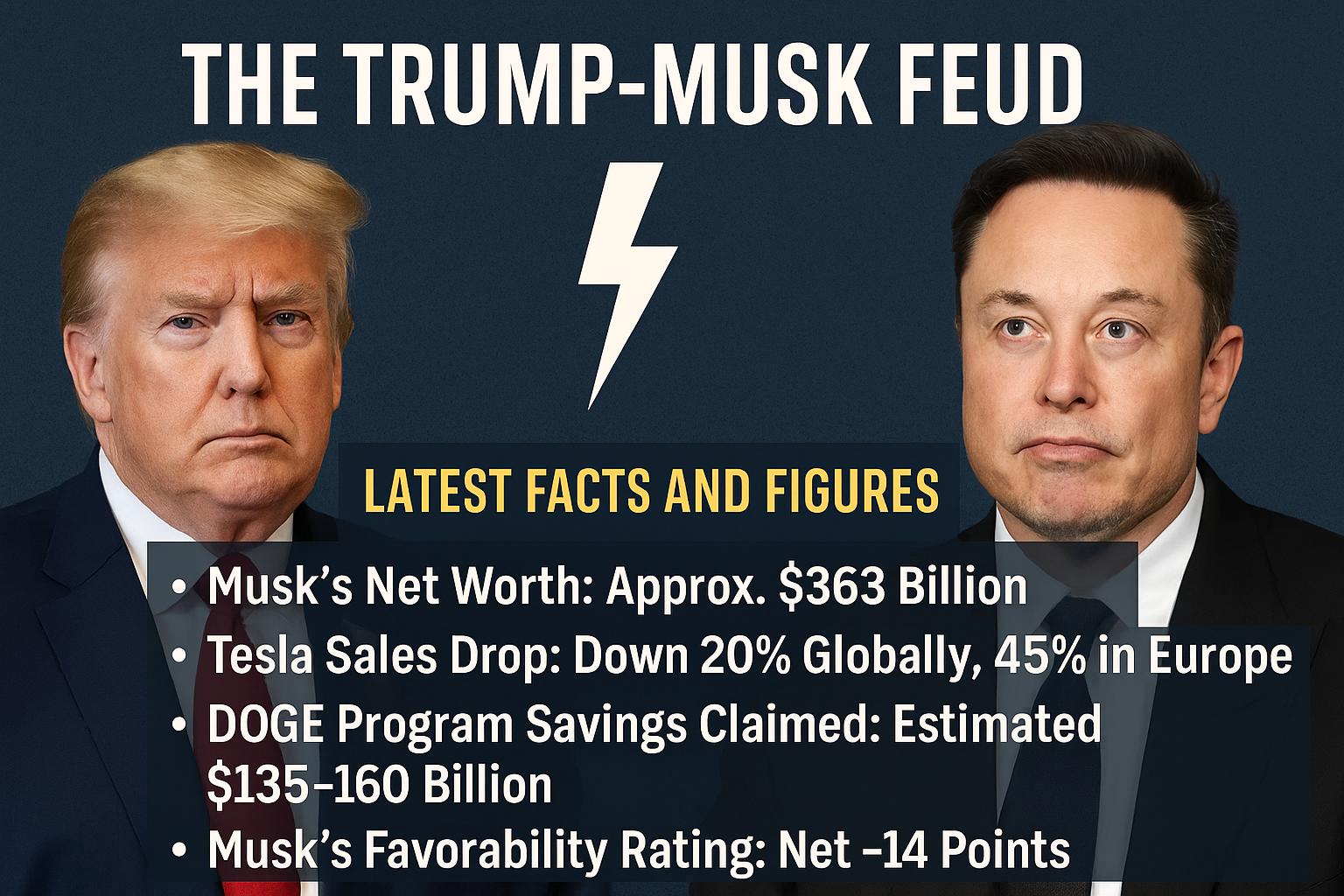
In a clash that’s as bold as their personalities, former President Donald Trump and billionaire entrepreneur Elon Musk are now locked in a very public and deeply personal power struggle. Once seen as ideological allies, the two have since turned into rivals—each trying to shape the future of American policy, economics, and influence. This Trump Musk Feud isn’t just about political differences—it’s about ego, power, and control over the national narrative.
How It All Started: From Collaboration to Confrontation
Back in 2016 and 2017, Elon Musk participated in advisory roles during Trump’s presidency. They shared common ground on deregulation and innovation, particularly in areas like space exploration and economic reform. However, this uneasy alliance soon began to crack.
When Trump pulled the U.S. out of the Paris Climate Agreement, Musk publicly opposed the move and resigned from Trump’s councils. That was the first real spark in what would eventually become a full-blown feud.
Fast forward to 2024, Musk surprisingly threw his weight behind Trump’s reelection campaign, even contributing financially to a degree. But their renewed relationship was short-lived.
The Fallout: Musk’s Exit and the Rise of the Trump Musk Feud
In mid-2025, Musk stepped down from his role as head of the newly formed Department of Government Efficiency (DOGE), citing fundamental disagreements with Trump’s new economic policies. The final blow came with Trump’s “One Big Beautiful Bill,” a massive government spending proposal that Musk described as “fiscally irresponsible” and “disastrous for innovation.”
Musk’s sharp criticism didn’t go unanswered. Trump fired back with blistering attacks, accusing Musk of hypocrisy and dependency on government subsidies for Tesla and SpaceX. The rift was no longer private—it became a headline-grabbing war of words.
Verbal Spats and Political Drama
The Trump Musk feud escalated rapidly. Musk accused Trump of promoting policies that would lead to “economic ruin.” Trump responded by calling Musk a “subsidy king” and threatened to cut federal contracts for his companies. He even took it a step further by questioning Musk’s immigration status and suggesting a possible deportation investigation—a move that shocked many political observers.
At the same time, Musk hinted at launching a new political movement—an “America Party”—to challenge both Democrats and Trump’s Republican base. This would be a direct challenge to Trump’s dominance over conservative politics.
The Impact of trump musk feud: Political, Economic, and Public Fallout
1. Political Power Struggles
Musk’s influence in conservative and centrist circles is growing, and his threat to fund political challengers is putting pressure on Republican lawmakers. Many now find themselves torn between Trump’s loyal base and Musk’s financial backing.
2. Stock Market Ripples
Tesla shares dropped sharply—falling as much as 8%—after Trump’s attacks on Musk’s businesses. The stock has declined by over 20% year-to-date, driven by both the feud and a global slowdown in electric vehicle sales. This shows how personal politics can impact real-world markets in significant ways.
3. Public Perception and Influence
Musk’s reputation, especially among Republicans, has taken a hit. Recent polls show a decline in his favorability, and some analysts suggest his political involvement is hurting his image as a visionary innovator.
Latest Facts and Figures (Mid-2025)
| Key Metrics | Details |
|---|---|
| Musk’s Net Worth | Approximately $363 billion |
| Tesla Sales Drop | Down 20% globally, 45% in Europe |
| DOGE Program Savings Claimed | Estimated $135–160 billion |
| Trump’s Political Standing | Leading GOP candidate, polarizing |
| Musk’s Favorability Rating | Net –14 points (Republican base drop) |
What’s Next in the Trump Musk Feud?
The conflict is far from over. If Trump’s economic bill passes, Musk is expected to retaliate politically. On the other hand, Trump may use his influence to target Musk’s businesses even further. This could include cutting tax incentives or revoking government contracts.
With 2026 elections approaching, both men are likely to ramp up their efforts to control the narrative. Musk wants a government that supports innovation and fiscal discipline. Trump wants unwavering loyalty and policy control.
Final Thoughts
The Trump Musk feud is more than just a high-profile disagreement—it’s a battle for influence over America’s future. One man is a political juggernaut with a loyal voter base; the other, a tech mogul with global reach and innovation power. Their fallout reflects deeper tensions in American society—between tradition and disruption, control and freedom, loyalty and independence.
As this clash continues, it will shape not just politics, but also technology, economics, and the way power is negotiated in the modern era. One thing is certain: neither Trump nor Musk is backing down anytime soon.